



Indian Psychology
Concept, characteristics, nature, scope and importance of Indian Psychology, the concept of Mana, its relation to other branches of knowledge, and its difference from Western Psychology.
Explore Module ➜Introduction to Psychology introduces the foundations of the human mind and behavior, blending Indian and modern perspectives. It helps you understand research methods, the biological basis of behavior, sensation and perception, and different states of consciousness.

Each module contains curated notes, diagrams, important questions and more.
Concept, characteristics, nature, scope and importance of Indian Psychology, the concept of Mana, its relation to other branches of knowledge, and its difference from Western Psychology.
Explore Module ➜Modern Psychology's nature and scope, research methods including descriptive, correlational and experimental, and methods of data collection such as observation, surveys and experiments.
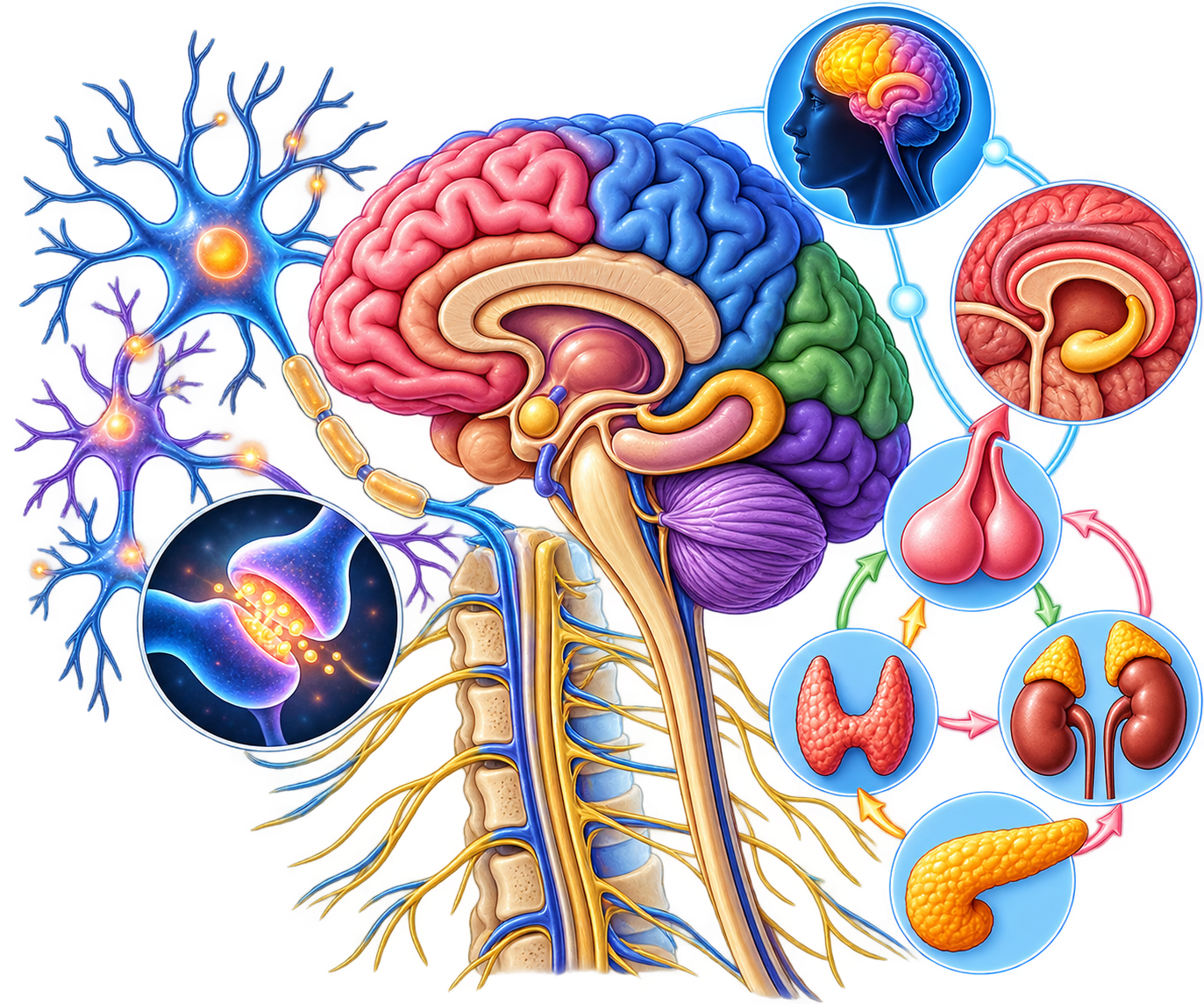
Explore Module ➜Neurons: structure and functions, central & peripheral nervous system, brain structure, limbic system, cerebral cortex, endocrine system, and the concept of Saptachakras and Nadi.
Explore Module ➜Sensory processes (visual and auditory), selective attention, Dharma and Dhyaan, perceptual organization, illusions, depth and distance perception, and Drashya and Drishtha.
Explore Module ➜The Indian notion of consciousness, biological rhythms, sleep and dreams, the role of yoga in consciousness, and different Yogasnaas and their psychological impacts.
Explore Module ➜A complete study resource built around the DAVV BA exam pattern.
These Introduction to Psychology notes for BA DAVV follow the official syllabus of Devi Ahilya Vishwavidyalaya, Indore, module by module, across all 45 lectures. From the roots of Indian Psychology in Module 1 to states of consciousness in Module 5, every concept is explained in simple language so you can understand the "why" behind each topic, not just memorize definitions.
Build a strong foundation with our Module 1 notes covering the concept, characteristics, nature, scope and importance of Indian Psychology, the concept of Mana, its relation to other branches of knowledge, and how it differs from Western Psychology.
Understand the nature and scope of modern Psychology, along with descriptive, correlational and experimental research methods, and data collection techniques such as observation, surveys and experiments in our Module 2 notes.
Learn about neurons, the central and peripheral nervous system, brain structure, the limbic system, cerebral cortex and endocrine system, along with the Indian concept of Saptachakras and Nadi.
Explore sensory processes, selective attention, Dharma and Dhyaan, the laws of perceptual organization, illusions and depth perception, along with the concept of Drashya and Drishtha.
Study the Indian notion of consciousness, biological rhythms, sleep and dreams, the role of yoga in consciousness, and different Yogasnaas and their psychological impacts in our Module 5 notes.
Every module includes Introduction to Psychology important questions commonly asked in DAVV BA semester exams, so you can revise efficiently in the final days before your exam without missing high-weightage topics.
Quick answers about Introduction to Psychology notes for BA DAVV students.
The DAVV BA Introduction to Psychology syllabus is divided into 5 modules across 45 lectures: Indian Psychology, Research Methods in Psychology, Biological Bases of Behavior, Sensation, Attention and Perception, and States of Consciousness.
Yes, all Introduction to Psychology notes for BA DAVV are completely free to read on CampusNotes directly on the website — no login, signup, or payment required.
There are 5 modules in DAVV BA Introduction to Psychology, totalling 45 lectures: Indian Psychology, Research Methods in Psychology, Biological Bases of Behavior, Sensation, Attention and Perception, and States of Consciousness.
Module 1 covers the concept, characteristics, nature, scope and importance of Indian Psychology, the concept of Mana, its relationship with other branches of knowledge, the difference between Indian and Western Psychology, and the methods of Indian Psychology.
Yes, CampusNotes is fully mobile-friendly, so you can study Introduction to Psychology notes on any device without downloading anything.