UNIT 1
Introduction to Drama
Introduction to Sanskrit drama, types of drama — tragedy, comedy, historical play and one act play — and the Natyashastra and Rasa Theory.
Explore Unit ➜Study of Drama traces dramatic literature from Sanskrit theatre and the Rasa Theory to Indian classical plays, modern Indian drama, the Renaissance stage and modern social drama. It covers plays by Kalidas, Shudrak, Dattani, Padmanabhan, Shakespeare, Marlowe, Shaw and Galsworthy with practical, activity-based learning.



Each unit contains curated notes, diagrams, important questions and more.
Introduction to Sanskrit drama, types of drama — tragedy, comedy, historical play and one act play — and the Natyashastra and Rasa Theory.
Explore Unit ➜
Kalidas's "Abhigyan Shakuntalam" (Act IV) and Shudrak's "Mrichha Katikum" (Act I), with Śrngāra, Karuna and Santa Rasa.
Explore Unit ➜
Mahesh Dattani's "Where There's a Will" and Manjula Padmanabhan's "Harvest", examining social allegory, power dynamics and gender indiscrimination.
Explore Unit ➜
William Shakespeare's "Merchant of Venice" and Christopher Marlowe's "Dr. Faustus", covering Elizabethan drama, the morality play and the tragic hero.
Explore Unit ➜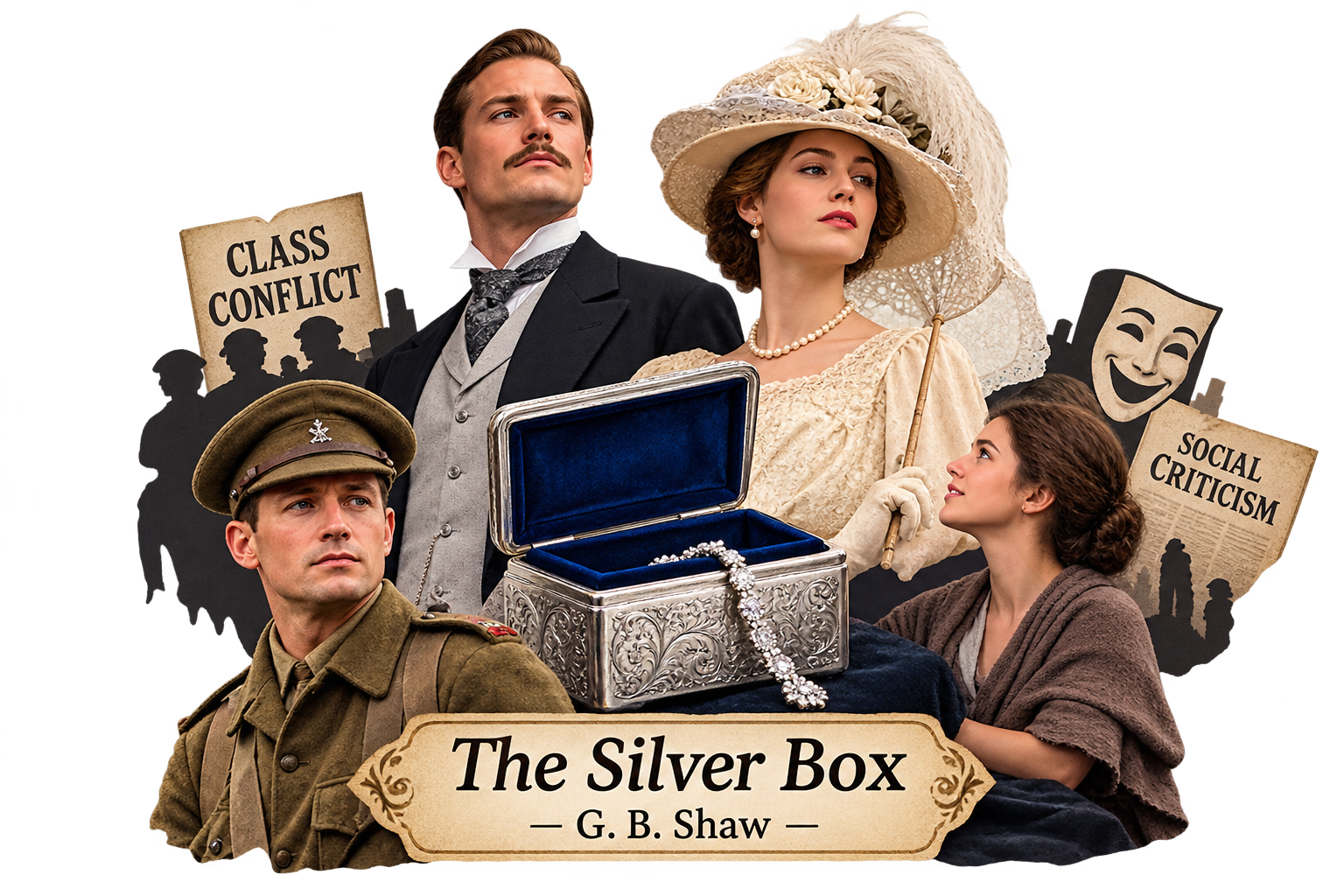
G. B. Shaw's "Arms and the Man" and John Galsworthy's "Silver Box", exploring realism, satire, social criticism and class conflict.
Explore Unit ➜A complete study resource built around the DAVV BA exam pattern.
These Study of Drama notes for BA DAVV follow the official syllabus of Devi Ahilya Vishwavidyalaya, Indore, topic by topic. From Sanskrit drama and Rasa Theory in Unit 1 to modern social drama in Unit 5, every play and concept is explained in simple language so you can understand the "why" behind each dramatic choice, not just memorize plot summaries.
Build a strong foundation with our Unit 1 notes covering Sanskrit drama, the types of drama — tragedy, comedy, historical play and one act play — and the Natyashastra and Rasa Theory of Bharatmuni.
Study Kalidas's "Abhigyan Shakuntalam" and Shudrak's "Mrichha Katikum", understanding Śrngāra, Karuna and Santa Rasa along with the Nāyaka-Nayika convention.
Analyse Mahesh Dattani's "Where There's a Will" and Manjula Padmanabhan's "Harvest", looking at social allegory, power dynamics and women's empowerment in our Unit 3 notes.
Explore Shakespeare's "Merchant of Venice" and Marlowe's "Dr. Faustus", with notes on the morality play, humanism, soliloquy and the supernatural elements of Elizabethan theatre.
Examine G. B. Shaw's "Arms and the Man" and John Galsworthy's "Silver Box", focusing on realism, satire, class conflict and hypocrisy.
Every unit includes Study of Drama important questions commonly asked in DAVV BA semester exams, so you can revise efficiently in the final days before your exam without missing high-weightage topics.
Quick answers about Study of Drama notes for BA DAVV students.
The DAVV BA Study of Drama syllabus is divided into 5 units: Introduction to Drama, Indian Classical Drama, Modern Indian Drama, Renaissance Drama, and Modern Drama.
Yes, all Study of Drama notes for BA DAVV are completely free to read on CampusNotes directly on the website — no login, signup, or payment required.
There are 5 units in DAVV BA Study of Drama: Introduction to Drama, Indian Classical Drama, Modern Indian Drama, Renaissance Drama, and Modern Drama.
Unit 4 covers William Shakespeare's "Merchant of Venice" and Christopher Marlowe's "Dr. Faustus", exploring Elizabethan drama, the morality play, humanism and the tragic hero.
Yes, CampusNotes is fully mobile-friendly, so you can study the Study of Drama notes on any device without downloading anything.