UNIT 1
Elements & Forms of Poetry
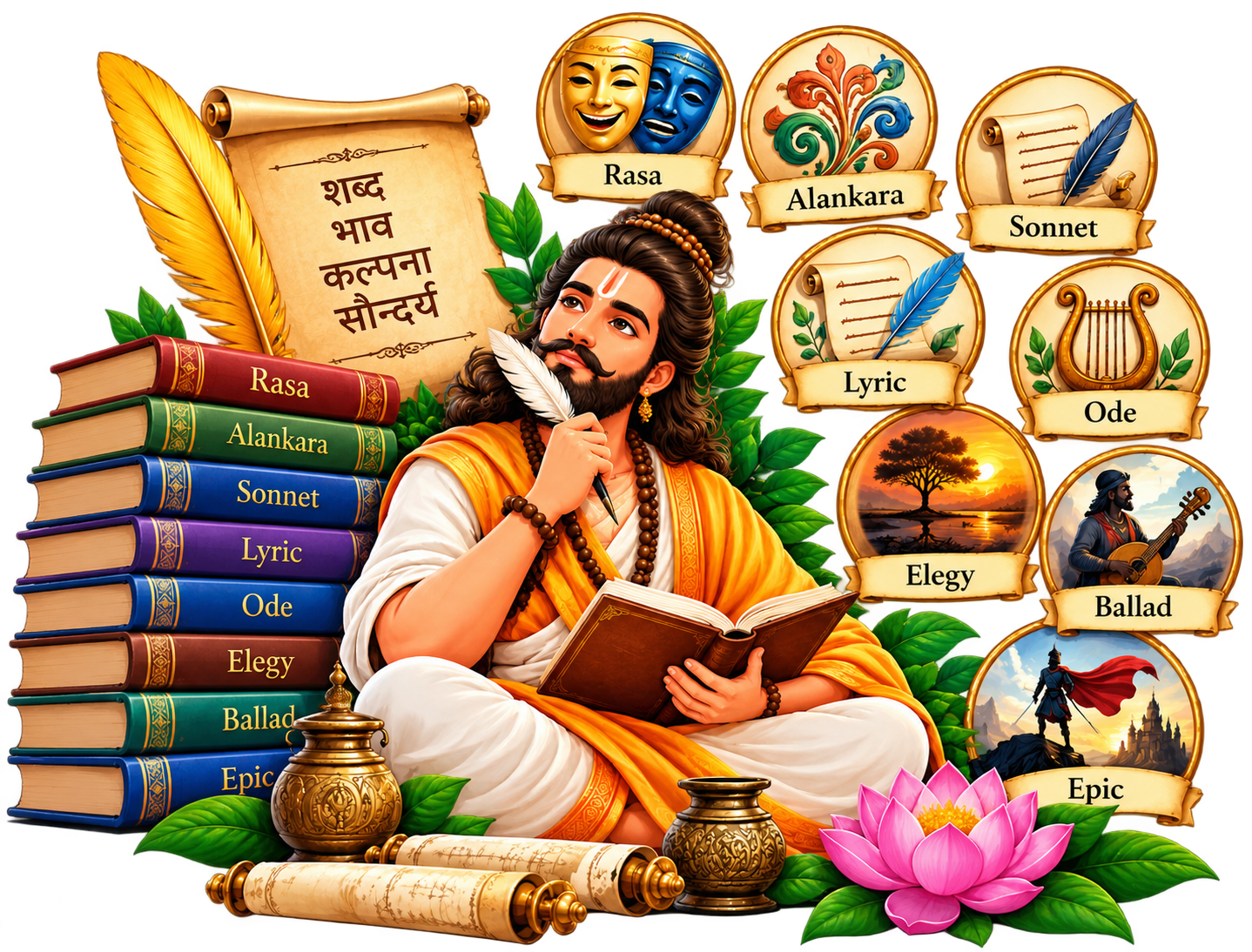
Rasa and Alankara as elements of poetry, and forms of poetry — sonnet, lyric, ode, elegy, ballad and epic.
Explore Unit ➜Study of Poetry traces the elements and forms of verse from Indian classical hymns and the Bhagwad Gita to modern Indian poets, Neo-Classical and Romantic nature poetry, and the Victorian age. It covers Rasa and Alankara, sonnets, odes and epics, and poets from the Rig Veda to Tennyson and Arnold with practical, activity-based learning.



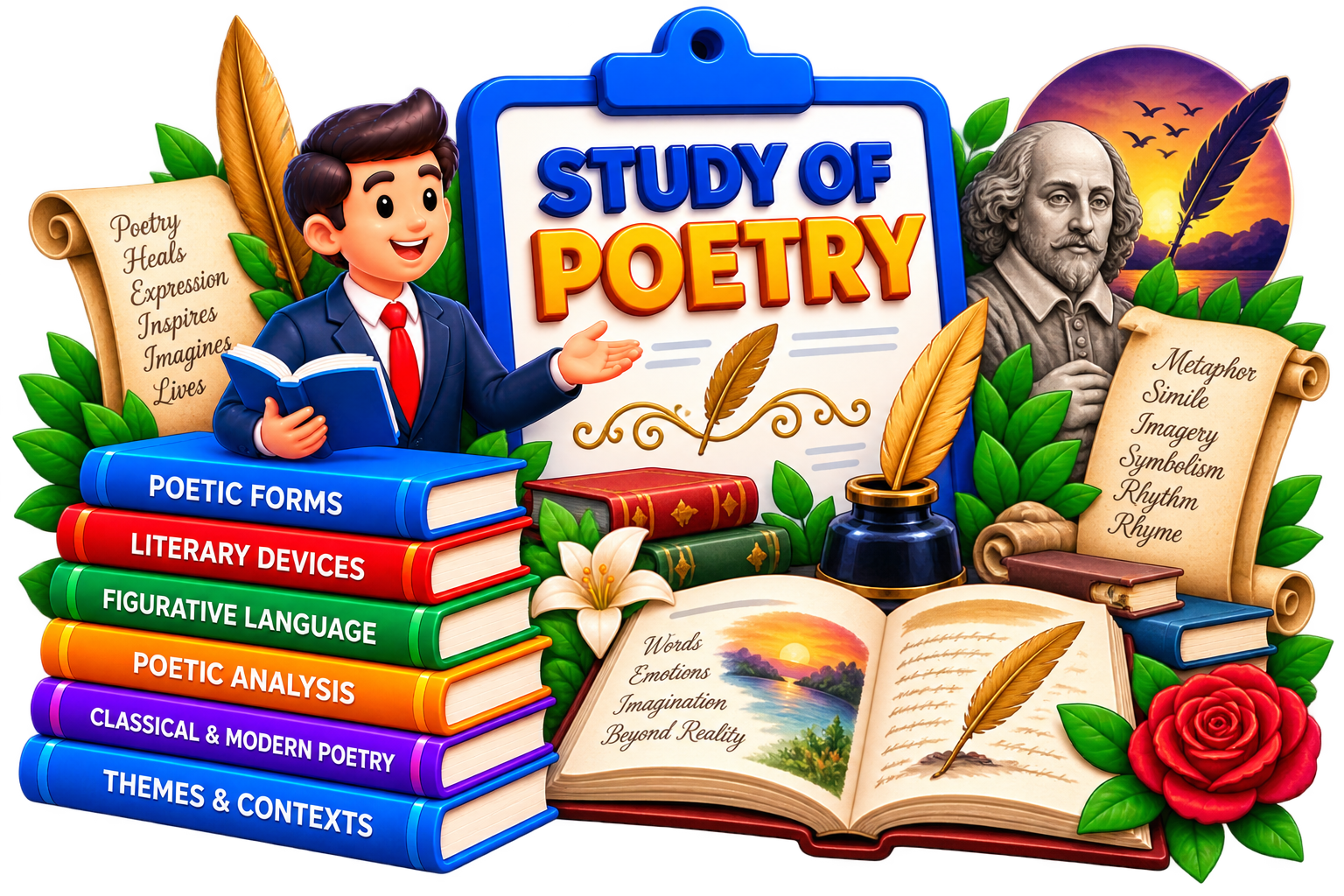
Each unit contains curated notes, diagrams, important questions and more.
Rasa and Alankara as elements of poetry, and forms of poetry — sonnet, lyric, ode, elegy, ballad and epic.
Explore Unit ➜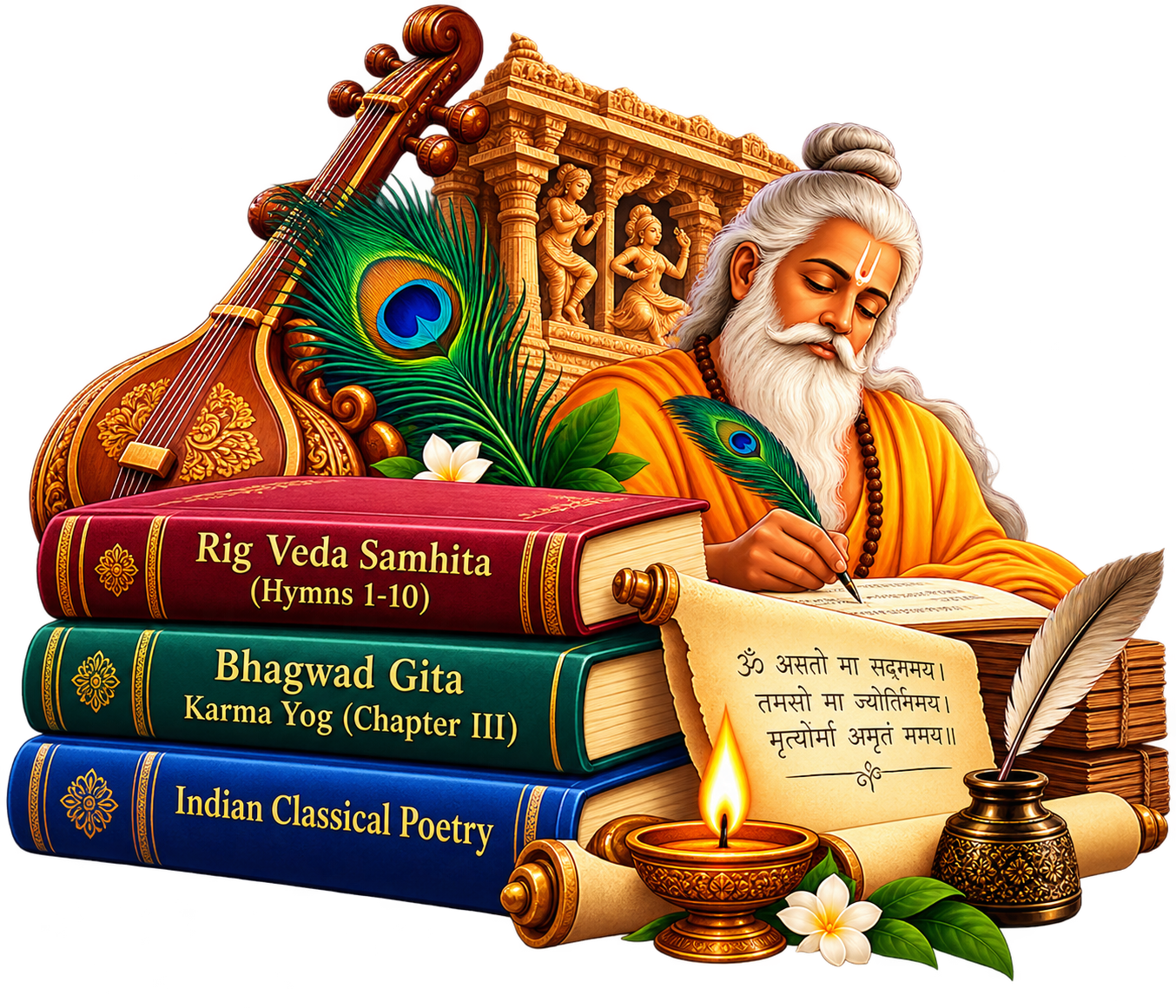
Rig Veda Samhita (Hymns 1-10) translated by H. H. Wilson, and the Bhagwad Gita's Karma Yog (Chapter III) translated by Dr. S. Radhakrishnan.
Explore Unit ➜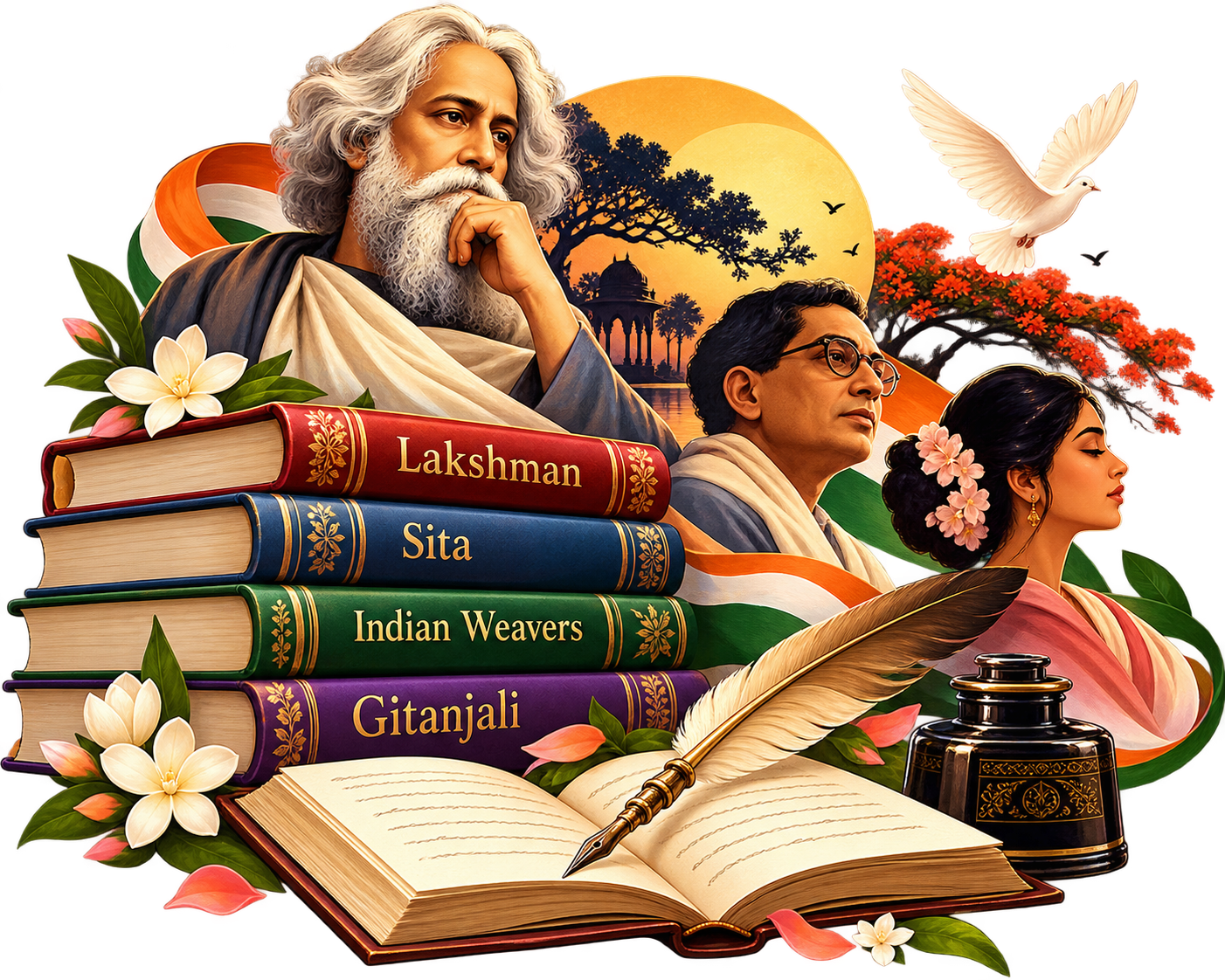
Toru Dutt's "Lakshman" and "Sita", Sarojini Naidu's "Indian Weavers", and R. N. Tagore's "Gitanjali" (Song I and II).
Explore Unit ➜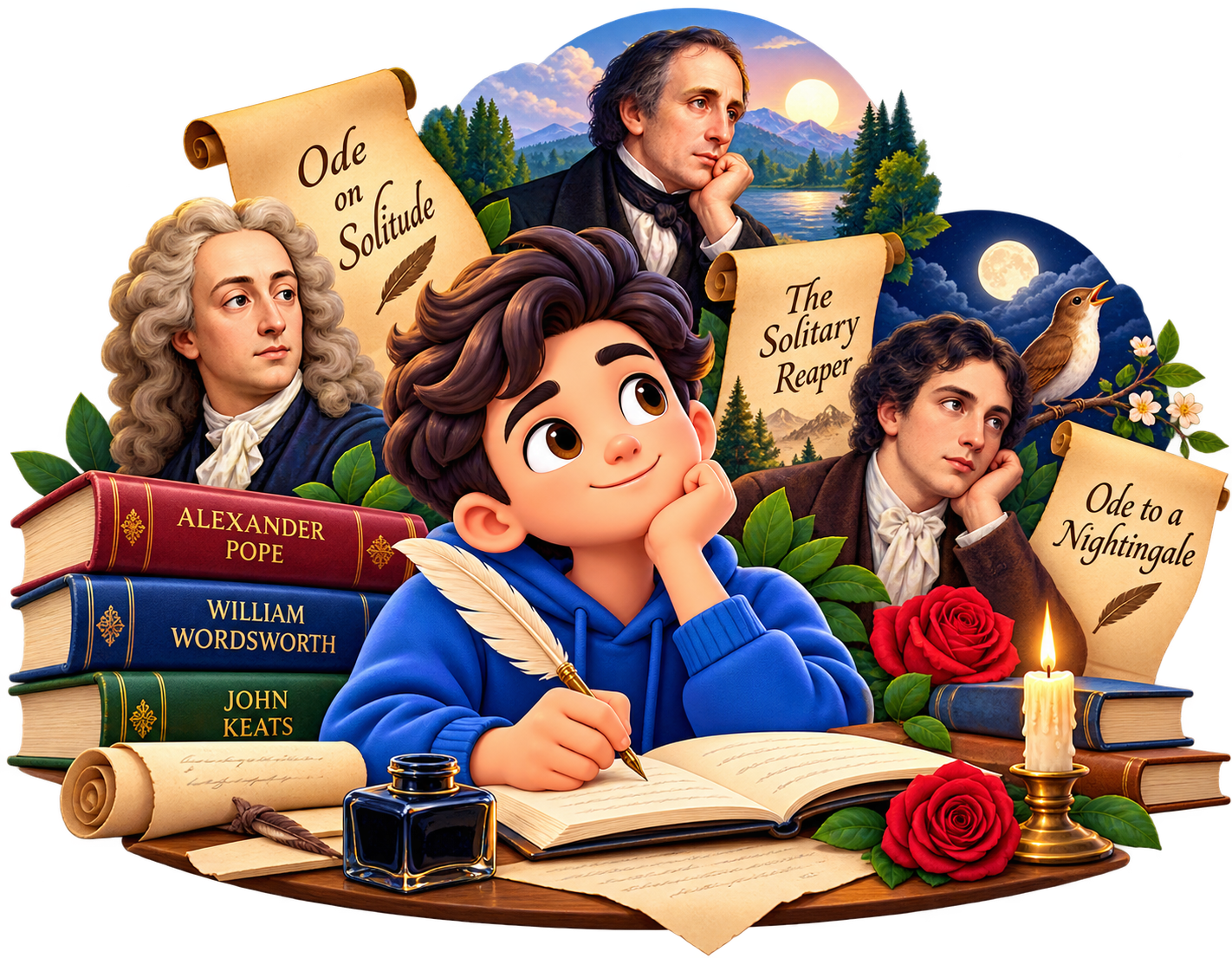
Alexander Pope's "Ode on Solitude", William Wordsworth's "The Solitary Reaper", and John Keats's "Ode to a Nightingale".
Explore Unit ➜
Alfred Lord Tennyson's "Crossing the Bar", Robert Browning's "Prospice", and Matthew Arnold's "Dover Beach".
Explore Unit ➜A complete study resource built around the DAVV BA exam pattern.
These Study of Poetry notes for BA DAVV follow the official syllabus of Devi Ahilya Vishwavidyalaya, Indore, topic by topic. From the elements and forms of poetry in Unit 1 to Victorian age poetry in Unit 5, every poem and concept is explained in simple language so you can understand the "why" behind each verse, not just memorize lines.
Build a strong foundation with our Unit 1 notes covering Rasa and Alankara as the aesthetic elements of poetry, and forms such as the sonnet, lyric, ode, elegy, ballad and epic.
Study hymns from the Rig Veda Samhita and the Karma Yog chapter of the Bhagwad Gita, understanding ancient Bhartiya wisdom and India's literary and cultural heritage in our Unit 2 notes.
Explore Toru Dutt, Sarojini Naidu and R. N. Tagore's "Gitanjali", tracing Indian English poetry, spirituality and patriotism.
Read Alexander Pope, William Wordsworth and John Keats, focusing on nature poetry, imagery, solitude and bliss across the Neo-Classical and Romantic ages.
Analyse Tennyson, Browning and Matthew Arnold, with notes on the dramatic monologue, extended metaphor and the impact of the Industrial Revolution.
Every unit includes Study of Poetry important questions commonly asked in DAVV BA semester exams, so you can revise efficiently in the final days before your exam without missing high-weightage topics.
Quick answers about Study of Poetry notes for BA DAVV students.
The DAVV BA Study of Poetry syllabus is divided into 5 units: Elements & Forms of Poetry, Indian Classical Poetry, Modern Indian Poetry, Poetry in the Neo-Classical and Romantic Age, and Poetry in the Victorian Age.
Yes, all Study of Poetry notes for BA DAVV are completely free to read on CampusNotes directly on the website — no login, signup, or payment required.
There are 5 units in DAVV BA Study of Poetry: Elements & Forms of Poetry, Indian Classical Poetry, Modern Indian Poetry, Poetry in the Neo-Classical and Romantic Age, and Poetry in the Victorian Age.
Unit 5 covers Alfred Lord Tennyson's "Crossing the Bar", Robert Browning's "Prospice", and Matthew Arnold's "Dover Beach", exploring the Industrial Revolution, extended metaphor and the dramatic monologue.
Yes, CampusNotes is fully mobile-friendly, so you can study the Study of Poetry notes on any device without downloading anything.