


Introduction to Accounting
Accounting and its place in business, double entry system, book keeping, financial, cost and management accounting, accounting practices and the ancient Indian Mahajani method.
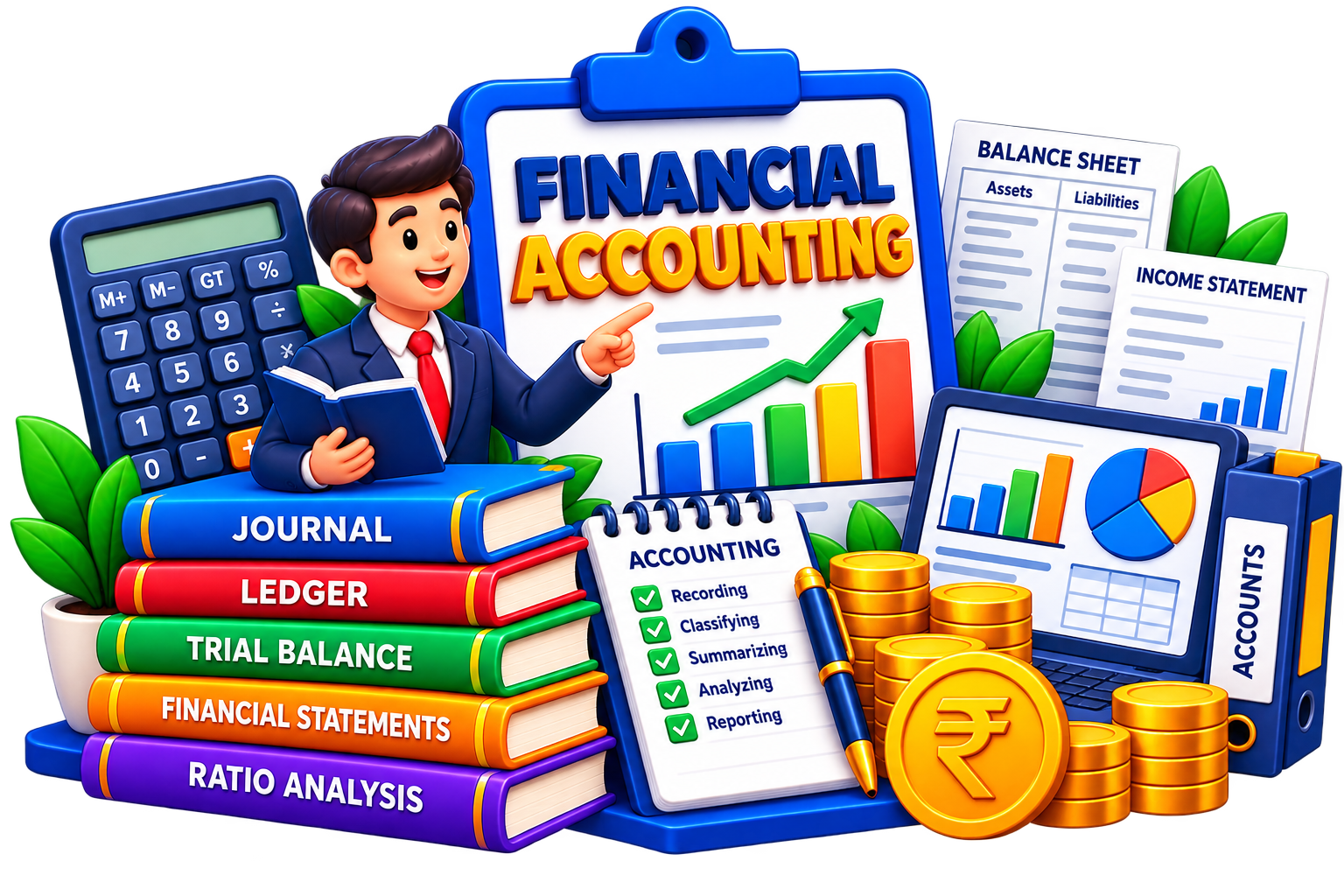
Explore Unit ➜Financial Accounting teaches you how to record, classify and summarise business transactions and prepare final accounts. It covers books of accounts, trial balance, trading and profit & loss accounts, balance sheet, bank reconciliation, royalty, branch accounts and depreciation with practical, activity-based learning.

Each unit contains curated notes, diagrams, important questions and more.
Accounting and its place in business, double entry system, book keeping, financial, cost and management accounting, accounting practices and the ancient Indian Mahajani method.
Explore Unit ➜Journal, ledger, trial balance and computerized accounting software such as Cloud Books, Wave and Tally.
Explore Unit ➜Trading account, profit and loss account and balance sheet prepared from the trial balance.
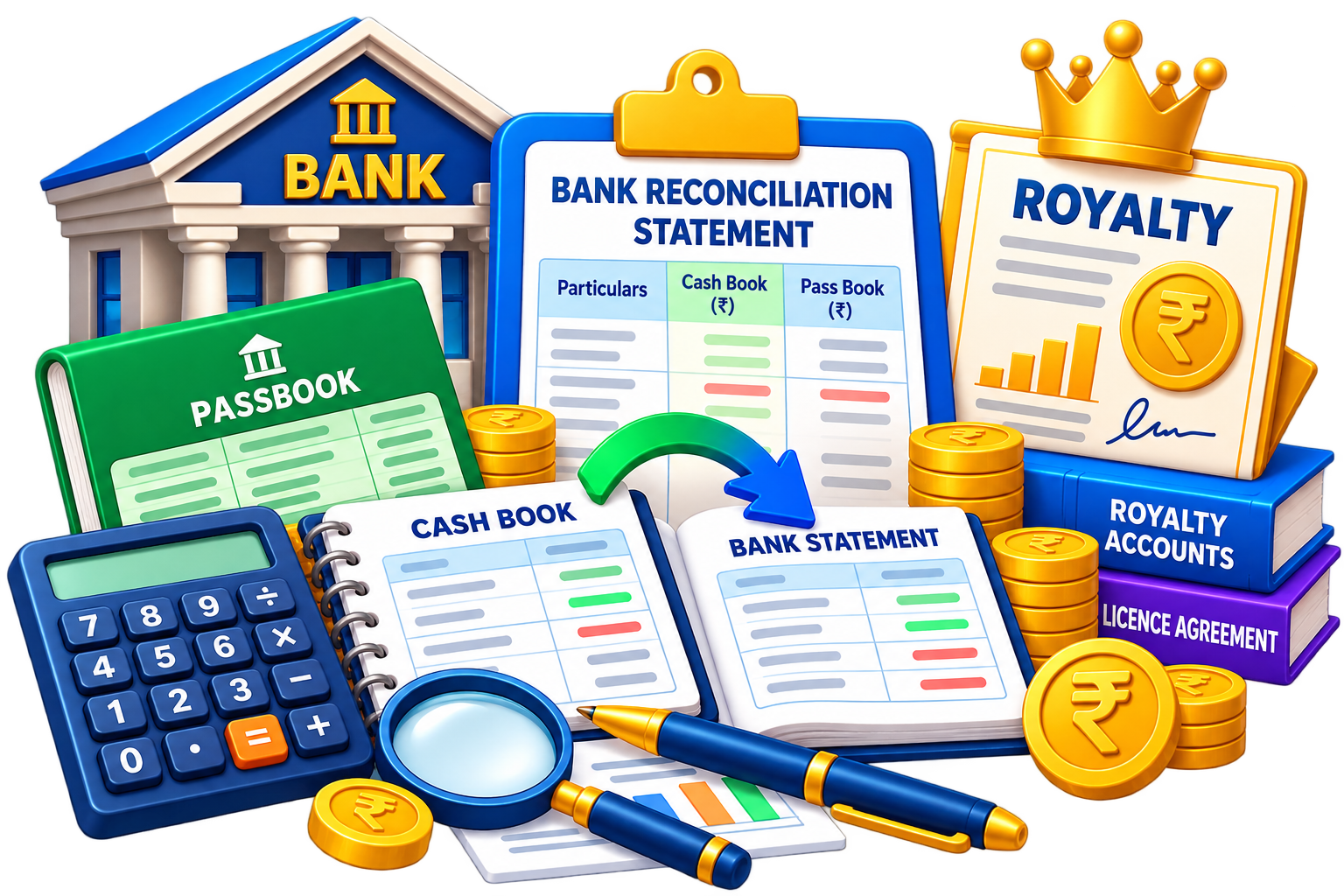
Explore Unit ➜Bank reconciliation statement, reasons for differences between the cash book and the passbook, and royalty accounts.
Explore Unit ➜Branch accounts, and depreciation accounting using the fixed installment method and the written down value method.
Explore Unit ➜A complete study resource built around the DAVV BBA exam pattern.
These Financial Accounting notes for BBA DAVV follow the official syllabus of Devi Ahilya Vishwavidyalaya, Indore, topic by topic. From the introduction to accounting in Unit 1 to branch accounts and depreciation in Unit 5, every concept is explained in simple language so you can understand the "why" behind each entry, not just memorize formats.
Build a strong foundation with our Unit 1 notes covering the double entry system, book keeping, the difference between financial, cost and management accounting, and the ancient Indian Mahajani method.
Learn how to pass journal entries, post them to ledgers, balance the accounts and prepare a trial balance, along with an introduction to accounting software like Tally, Wave and Cloud Books in our Unit 2 notes.
Prepare the trading account, profit and loss account and balance sheet step by step from the trial balance, with solved examples in an exam-friendly way.
Understand why the cash book and the passbook differ, learn to prepare a bank reconciliation statement, and work through royalty accounts with practical illustrations.
Practise branch accounts and calculate depreciation using the fixed installment method and the written down value method.
Every unit includes Financial Accounting important questions commonly asked in DAVV BBA semester exams, so you can revise efficiently in the final days before your exam without missing high-weightage topics.
Quick answers about Financial Accounting notes for BBA DAVV students.
The DAVV BBA Financial Accounting syllabus is divided into 5 units: Introduction to Accounting, Types of Books of Accounts & their Preparation, Preparation of Final Accounts, Bank Reconciliation Statement & Royalty Accounts, and Branch Accounts & Depreciation Accounting.
Yes, all Financial Accounting notes for BBA DAVV are completely free to read on CampusNotes directly on the website — no login, signup, or payment required.
There are 5 units in DAVV BBA Financial Accounting: Introduction to Accounting, Types of Books of Accounts & their Preparation, Preparation of Final Accounts, Bank Reconciliation Statement & Royalty Accounts, and Branch Accounts & Depreciation Accounting.
Unit 3 covers the preparation of the trading account, profit and loss account and balance sheet from the trial balance.
Yes, CampusNotes is fully mobile-friendly, so you can study Financial Accounting notes on any device without downloading anything.