Cloud Computing Fundamental
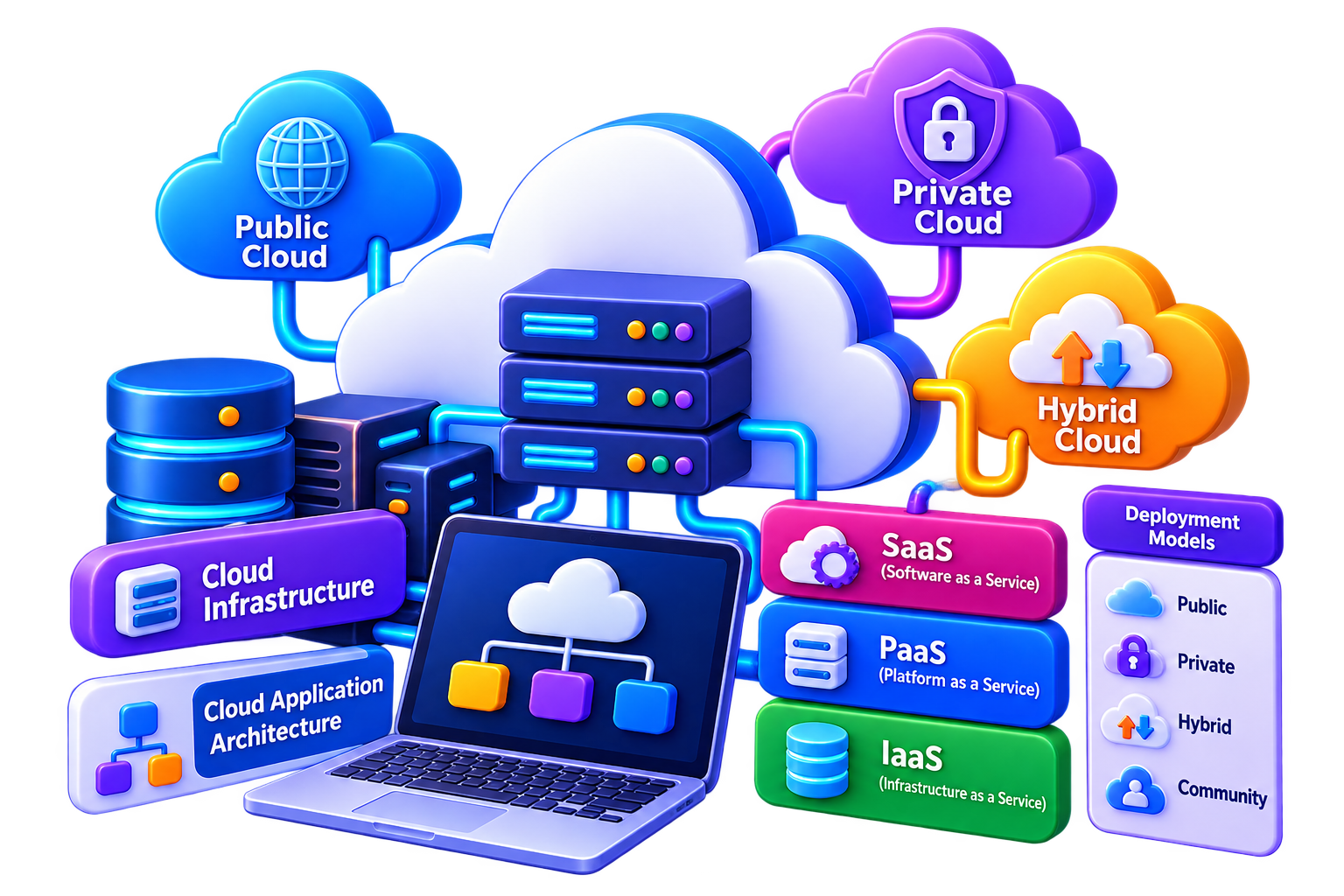
Cloud computing definition, private, public and hybrid cloud, cloud types (IaaS, PaaS, SaaS), benefits and challenges of cloud computing, and public vs private clouds.
Explore Unit ➜Introduction to Cloud Computing covers the fundamentals, technologies, architectures and practical applications of cloud computing. Learn about cloud models, virtualization, storage, security and widely used cloud technologies.
Each unit contains curated notes, diagrams, important questions and more.
Cloud computing definition, private, public and hybrid cloud, cloud types (IaaS, PaaS, SaaS), benefits and challenges of cloud computing, and public vs private clouds.
Explore Unit ➜Basics of service management, data management in cloud computing, Cloud Reference Model, layers & types of clouds, and architectural design of compute and storage clouds.
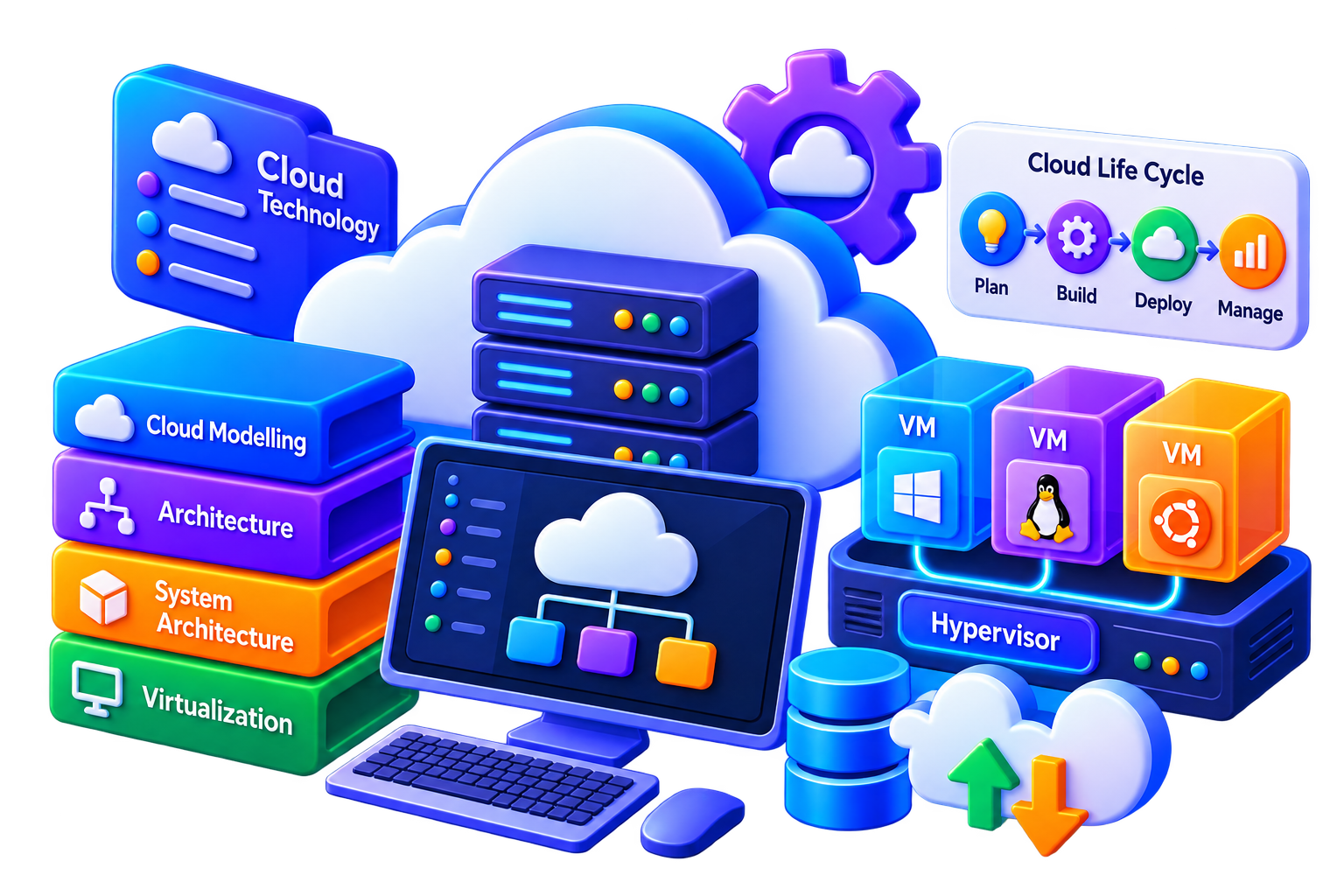
Explore Unit ➜Fundamental concepts of compute, storage, networking, desktop and application virtualization, role & benefits of virtualization, server virtualization, and block & file level storage virtualization.
Explore Unit ➜Cloud information security fundamentals, security services, design principles, secure cloud software requirements, policy implementation, security challenges, and virtualization security.
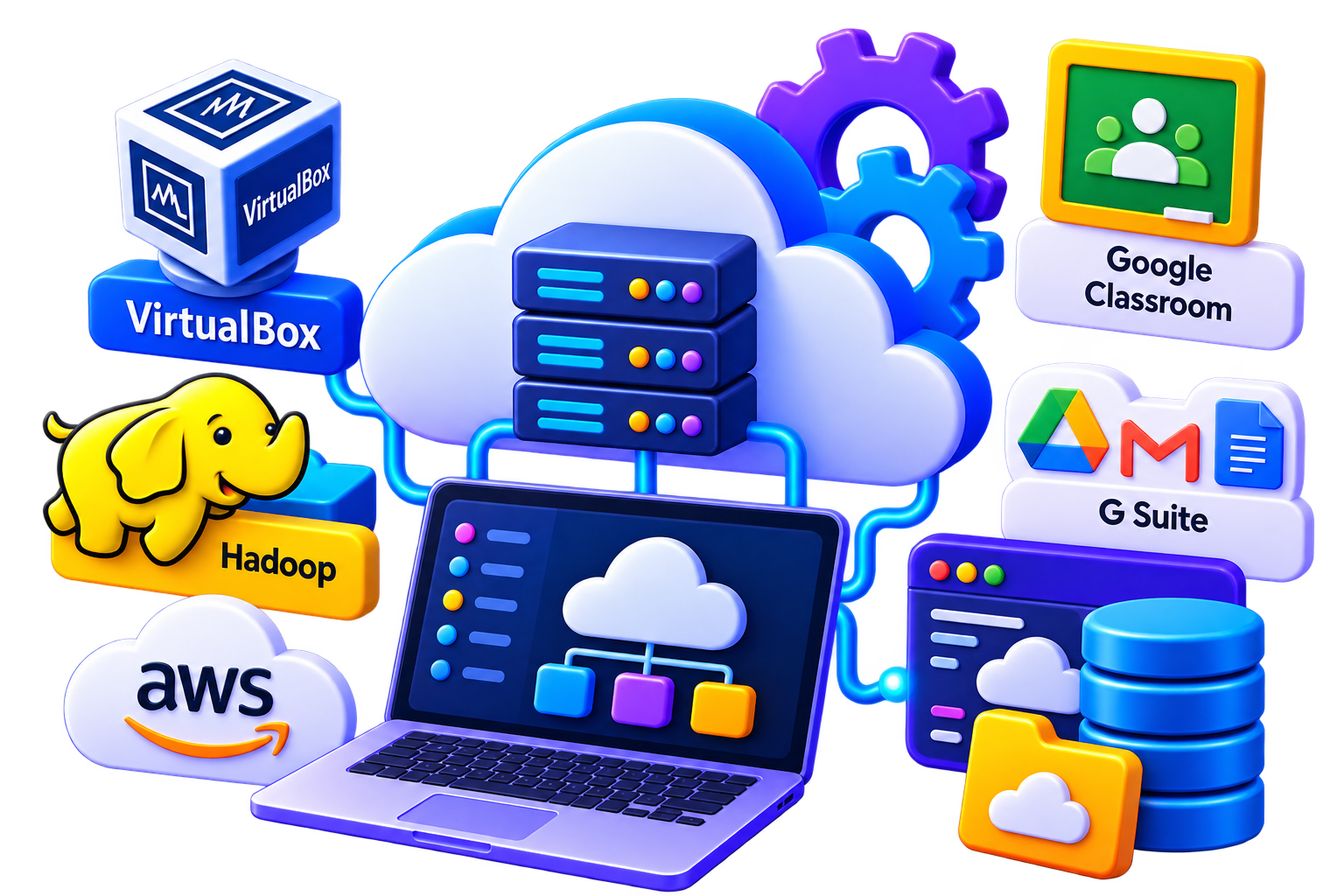
Explore Unit ➜Market-based management of clouds, federated clouds/inter-cloud definition & federation stack, third-party cloud services, and case studies: Google App Engine, Microsoft Azure, Hadoop, Amazon, and Aneka.
Explore Unit ➜
“Learn today
build tomorrow
shape your future.”
A complete study resource built around the DAVV BCA syllabus.
These Cloud Computing notes for BCA DAVV strictly adhere to the official 6th semester syllabus of Devi Ahilya Vishwavidyalaya, Indore (90 total lectures). From cloud fundamentals and service models in Unit 1 to federated clouds and case studies in Unit 5, every topic is explained with clear conceptual diagrams and exam-oriented depth.
Build a robust foundation with our Unit 1 notes covering the NIST definition of cloud computing, private, public, and hybrid clouds, the SPI service models (IaaS, PaaS, SaaS), benefits and challenges, and an exhaustive public vs private cloud comparative analysis.
Master the mechanics of Unit 2: Service Level Agreements (SLAs), cloud metering and pricing models, data management in distributed clouds, the NIST Cloud Reference Model, architectural layers, and the design of Compute and Storage Clouds.
Dive deep into Unit 3 notes exploring compute, storage, networking, desktop (VDI), and application virtualization, Type-1 vs Type-2 hypervisors, server virtualization, VM live migration, and block-level vs file-level storage virtualization.
Understand Unit 4 information security fundamentals (CIA triad), cloud security services (IAM, KMS, WAF), Zero Trust principles, secure software requirements, cloud security threat vectors, and hypervisor/virtualization security management.
Complete your preparation with Unit 5: market-based cloud management, spot markets, Inter-Cloud/Federated clouds, the Cloud Federation Stack, and in-depth case studies on Google App Engine, Microsoft Azure, Apache Hadoop, AWS, and Aneka.
Quick answers to common questions about the subject.
The DAVV BCA Cloud Computing syllabus comprises 5 units (90 lectures total): Unit 1: Cloud Computing Fundamental (Public, Private, Hybrid, IaaS, PaaS, SaaS); Unit 2: Service & Data Management & Cloud Architecture; Unit 3: Cloud Management & Virtualization (Server, Block & File Storage); Unit 4: Cloud Security Architecture & Policies; Unit 5: Market-Based Management, Federated Clouds, and Case Studies (AWS, Azure, Google App Engine, Hadoop, Aneka).
There are 5 comprehensive units in the DAVV BCA Cloud Computing syllabus, with 18 lectures allocated per unit.
Unit 3 covers fundamental concepts of compute, storage, networking, desktop and application virtualization, the role of virtualization in enabling the cloud, server virtualization techniques, and block-level and file-level storage virtualization.
Unit 5 includes five major real-world case studies: Google App Engine, Microsoft Azure, Apache Hadoop, Amazon (AWS), and the Aneka Cloud Application Platform.
Yes. CampusNotes is fully responsive and mobile-friendly so you can study your Cloud Computing notes on any smartphone, tablet, or desktop device.