



Introduction to Computer Networks
Network goals & applications, network structure, services and standardization, networking models (centralized, distributed, collaborative), and network topologies — Bus, Star, Ring, Tree & Hybrid.
Explore Unit ➜Computer Networks (CN) introduces the concepts of data communication, network architectures, and protocols. It helps you understand how data travels across devices and how networks are designed, secured, and managed in real-world systems.

Each unit contains curated notes, diagrams, important questions and more.
Network goals & applications, network structure, services and standardization, networking models (centralized, distributed, collaborative), and network topologies — Bus, Star, Ring, Tree & Hybrid.
Explore Unit ➜Theoretical basis of data communication, transmission media (twisted pair, coaxial, fiber optics), line-of-sight & satellite transmission, analog vs digital transmission, and circuit, packet & message switching.
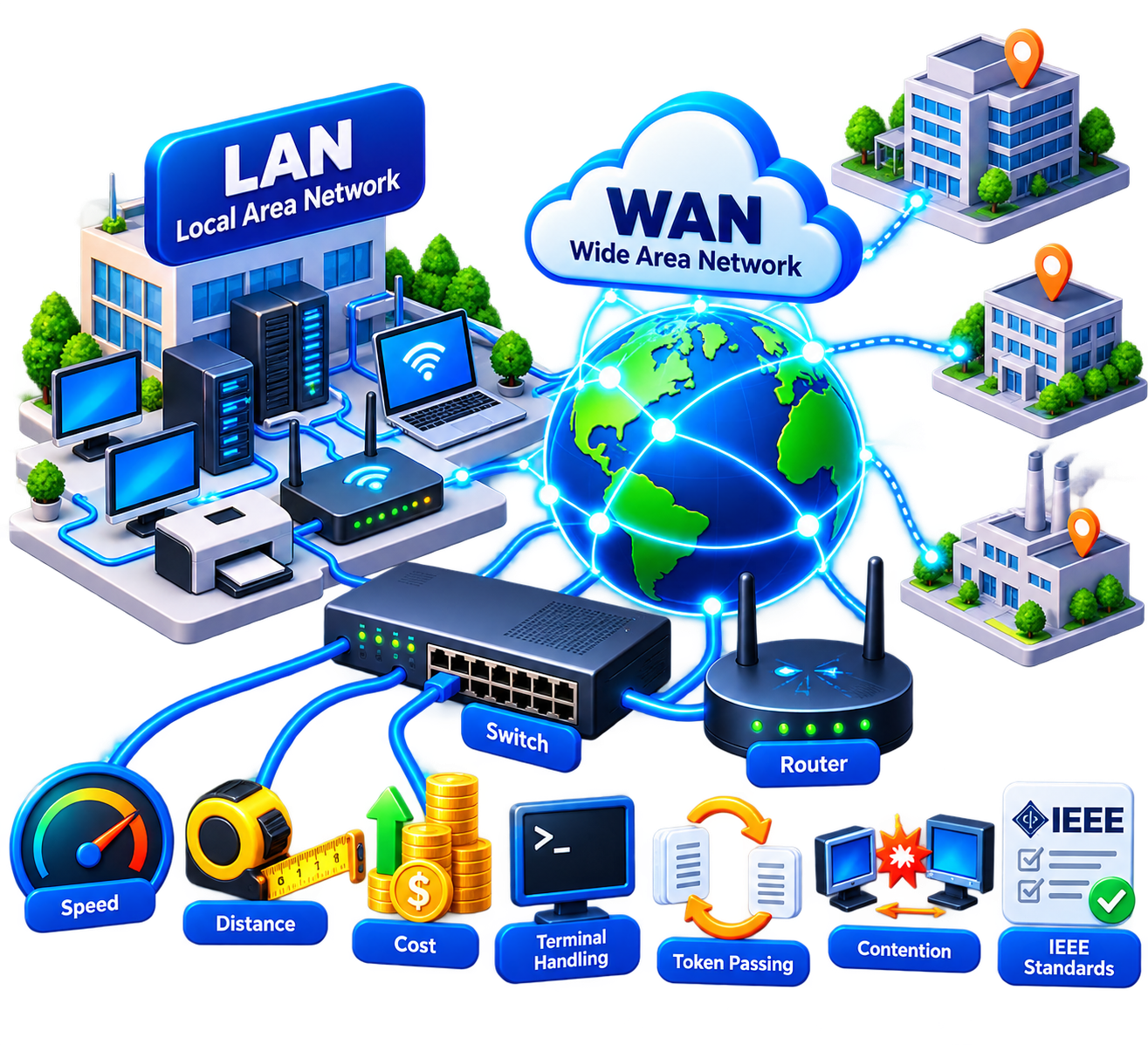
Explore Unit ➜Overview & classification of LAN and WAN, their differences in media, topology, speed, distance and cost, terminal handling, polling, token passing, contention, and IEEE standards.
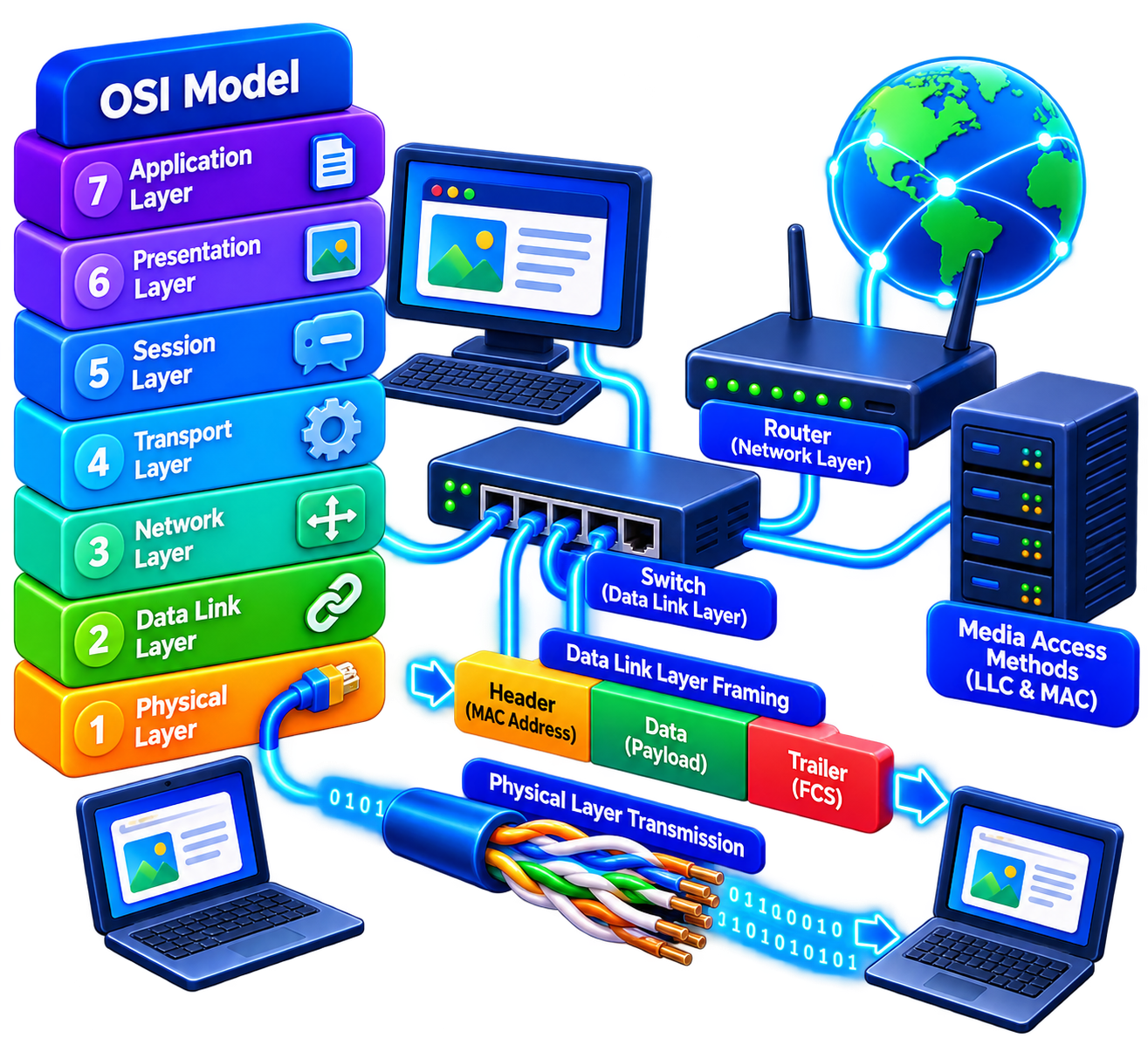
Explore Unit ➜Open systems & network architectures, the ISO-OSI reference model and its layers, physical layer transmission & signaling, and data link layer addressing, media access methods & LLC.
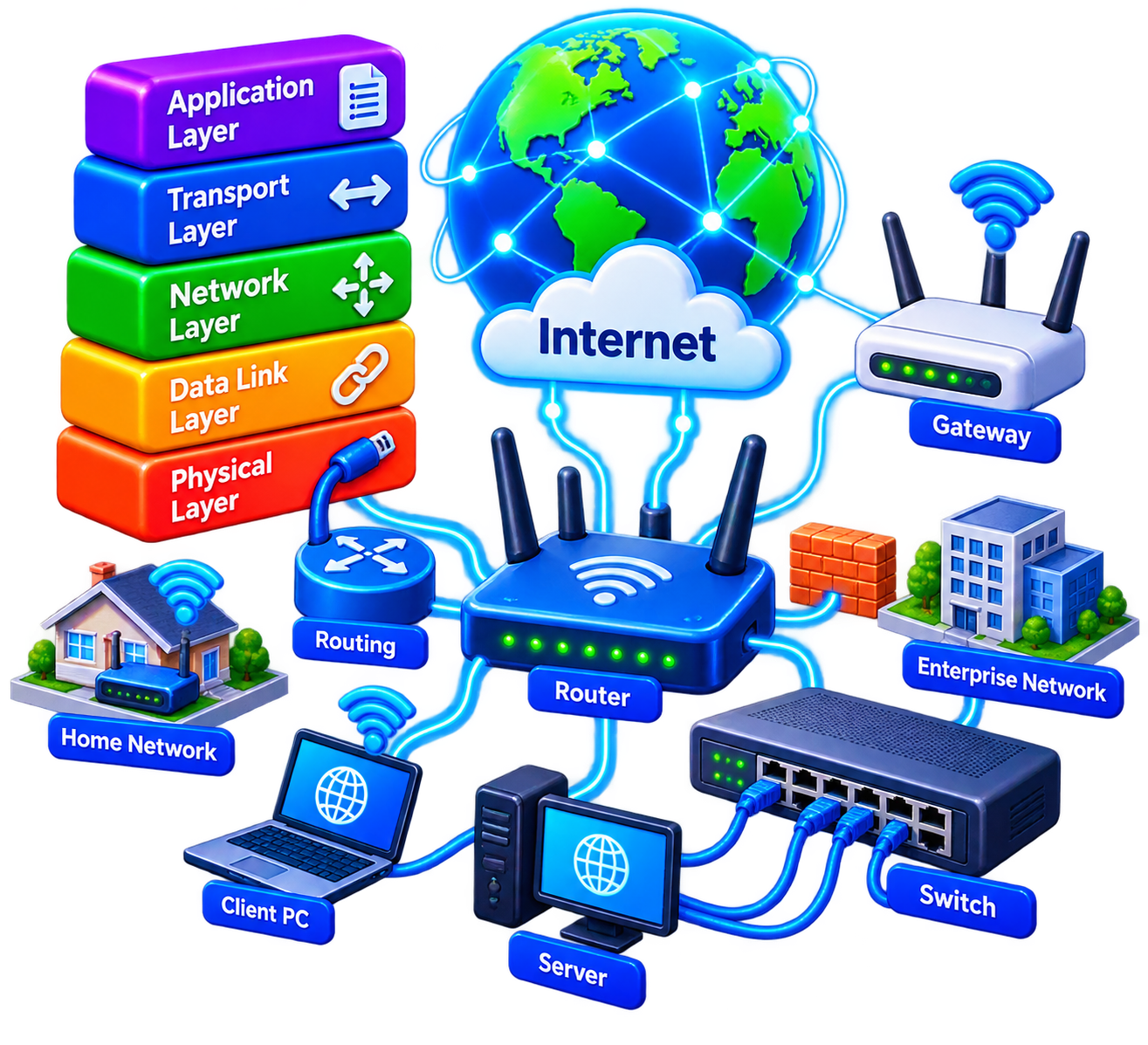
Explore Unit ➜Routing (fewest-hops, type-of-service, gateway updates), gateways, bridges & routers, OSI vs TCP/IP, TCP/IP & Ethernet, and the structure & standards of the Internet.
Explore Unit ➜
“Strong networks
connect brighter
futures.”
A complete study resource built around the DAVV BCA exam pattern.
These Computer Networks notes for BCA DAVV follow the official 6th semester syllabus of Devi Ahilya Vishwavidyalaya, Indore, topic by topic. From network fundamentals and topologies in Unit 1 to routing, gateways and the Internet in Unit 5, every concept is explained in simple language so you can understand the "why" behind each topic, not just memorize definitions.
Build a strong foundation with our Unit 1 notes covering network goals and applications, network structure and services, network standardization, centralized/distributed/collaborative networking models, and the selection & evaluation of Bus, Star, Ring, Tree and Hybrid topologies.
Get a strong grip on the theoretical basis of data communication, transmission media such as twisted pair (UTP/STP), coaxial cable and fiber optics, line-of-sight and satellite transmission, and switching techniques including FDM/TDM/STDM, circuit switching, packet switching and message switching — all covered in our Unit 2 notes.
Struggling with LAN and WAN notes? Our Unit 3 notes break down LAN/WAN classification, their differences in media, topology, speed, distance and cost, terminal handling, polling, token passing, contention and IEEE standards — one of the most frequently asked topics in Computer Networks exams.
Understand open systems and network architectures through our OSI reference model notes — covering all seven layers — along with data link layer notes on addressing, media access methods, logical link control and basic algorithms/protocols, used in real-world network systems.
Go beyond textbook basics with notes on routing algorithms (fewest-hops and type-of-service routing), gateways, bridges and routers, gateway protocols and routing daemons, OSI vs TCP/IP models, TCP/IP and Ethernet, and the structure and standards of the Internet.
Every unit includes Computer Networks important questions commonly asked in DAVV BCA semester exams, so you can revise efficiently in the final days before your exam without missing high-weightage topics.
Quick answers about Computer Networks notes for BCA DAVV students.
The DAVV BCA Computer Networks syllabus for 6th semester is divided into 5 units: Introduction to Computer Networks, Data Communication & Transmission Media, LAN, WAN & IEEE Standards, OSI Model & Data Link Layer, and Network Layer & The Internet.
Yes, all Computer Networks notes for BCA DAVV are completely free to read on CampusNotes directly on the website — no login, signup, or payment required.
There are 5 units in DAVV BCA Computer Networks: Introduction to Computer Networks, Data Communication & Transmission Media, LAN, WAN & IEEE Standards, OSI Model & Data Link Layer, and Network Layer & The Internet.
Unit 3 covers an overview and classification of LAN and WAN, their salient differences in media, topology, transmission speed, distance and cost, terminal handling, polling, token passing, contention, and IEEE standards.
Yes, CampusNotes is fully mobile-friendly, so you can study Computer Networks notes on any device without downloading anything.