UNIT 1
Introduction to IoT
Definition & characteristics of IoT, IoT conceptual framework, IoT architectural view, and the physical & logical design of IoT with its applications.
Explore Unit ➜Internet of Things (IoT) introduces the concepts of connected devices, sensors, and smart systems. It helps you understand how everyday objects communicate, how data flows between them, and how IoT solutions are designed, secured, and deployed in real-world systems.



Each unit contains curated notes, diagrams, important questions and more.
Definition & characteristics of IoT, IoT conceptual framework, IoT architectural view, and the physical & logical design of IoT with its applications.
Explore Unit ➜
Machine-to-Machine (M2M) communication, Software-Defined Networking (SDN) and Network Function Virtualization (NFV) for IoT, data storage in IoT, and IoT cloud based services.
Explore Unit ➜
Design principles for web connectivity — web & message communication protocols, SOAP, REST, HTTP Restful & Web Sockets — plus internet connectivity, IP addressing in IoT, and media access control.
Explore Unit ➜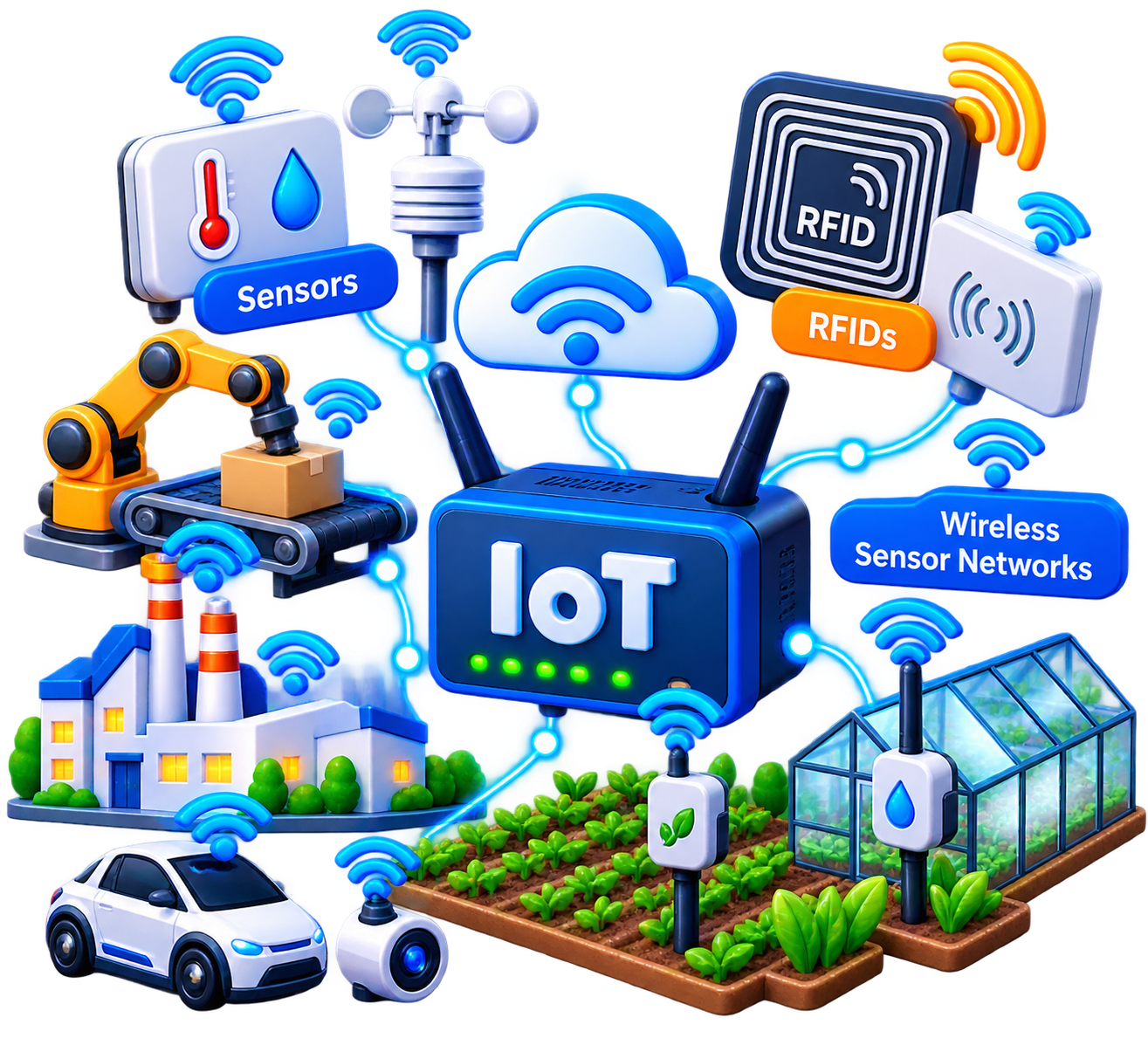
Sensor technology, participatory sensing, industrial & automotive IoT, actuators, sensor data communication protocols, RFID technology, and wireless sensor networks.
Explore Unit ➜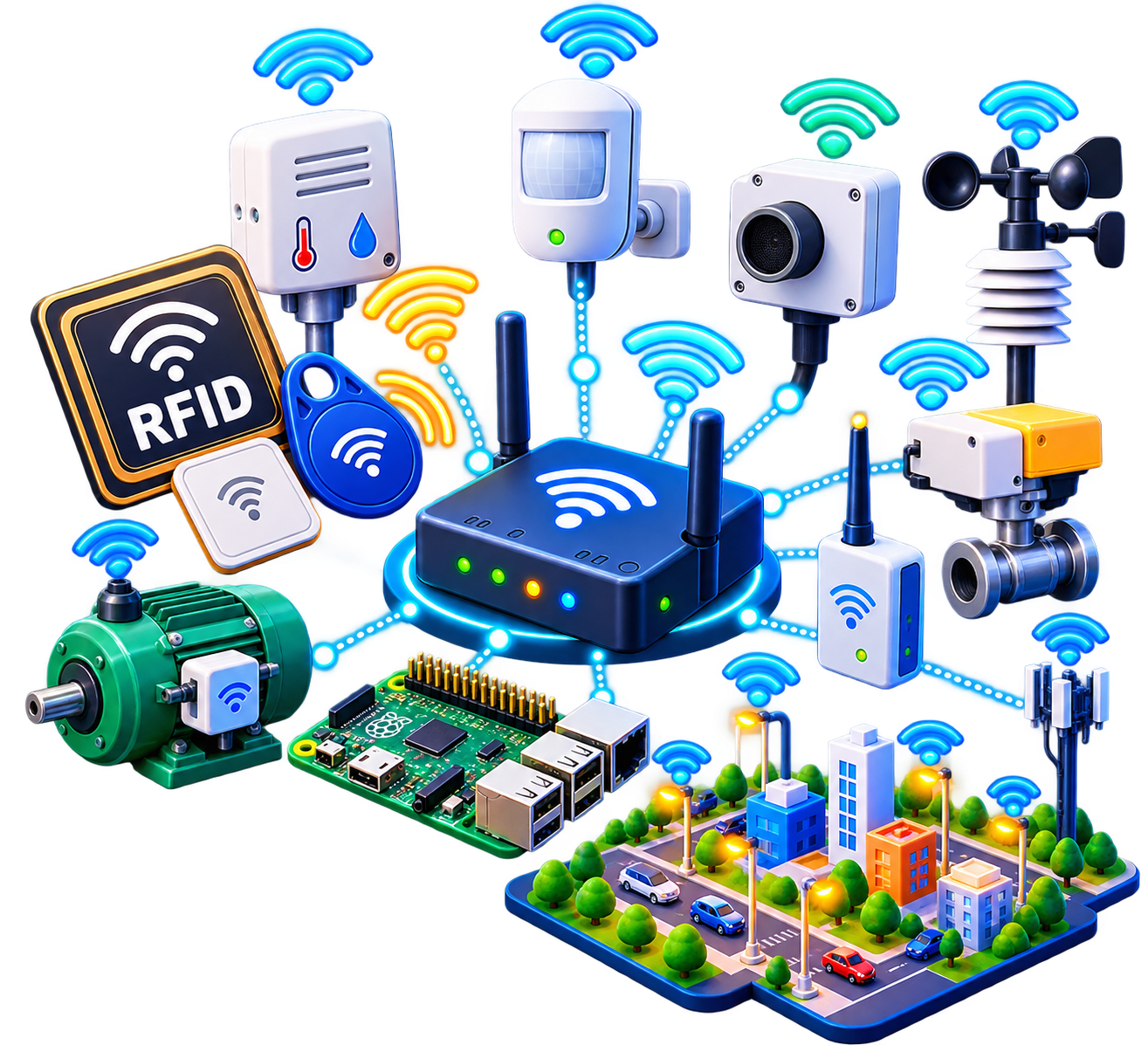
Specification — requirement, process, model, service, functional & operational view, IoT privacy & security solutions, Raspberry Pi & Arduino devices, and a smart city streetlight case study.
Explore Unit ➜
“Small devices,
connected together,
build a smarter world.”
A complete study resource built around the DAVV BCA exam pattern.
These Internet of Things notes for BCA DAVV follow the official syllabus of Devi Ahilya Vishwavidyalaya, Indore, topic by topic. From IoT fundamentals and architecture in Unit 1 to IoT design methodology and case studies in Unit 5, every concept is explained in simple language so you can understand the "why" behind each topic, not just memorize definitions.
Build a strong foundation with our Unit 1 notes covering the definition and characteristics of IoT, the IoT conceptual framework, IoT architectural view, and the physical and logical design of IoT along with its real-world applications.
Get a strong grip on Machine-to-Machine (M2M) communication, Software-Defined Networking (SDN) and Network Function Virtualization (NFV) for IoT, along with data storage in IoT and IoT cloud based services — key topics for both exams and industry roles.
Struggling with IoT connectivity notes? Our Unit 3 notes break down web communication protocols like SOAP, REST, HTTP Restful and Web Sockets, plus internet connectivity principles, IP addressing in IoT, and media access control — with clear examples and step-by-step explanations.
Understand how IoT devices sense the world through our sensor & RFID notes — covering sensor technology, participatory sensing, industrial & automotive IoT, actuators, sensor data communication protocols, RFID technology, and wireless sensor network notes.
Go beyond textbook basics with notes on IoT specification — requirement, process, model, service, and functional & operational views — IoT privacy & security solutions, Raspberry Pi & Arduino devices, and a real-world smart city streetlight control & monitoring case study.
Every unit includes Internet of Things important questions commonly asked in DAVV BCA exams, so you can revise efficiently in the final days before your exam without missing high-weightage topics.
Quick answers about Internet of Things notes for BCA DAVV students.
The DAVV BCA Internet of Things (IoT) syllabus is divided into 5 units: Introduction to IoT, M2M, SDN, NFV & Cloud Services, Web & Internet Connectivity Principles, Sensors, RFIDs & Wireless Sensor Networks, and IoT Design Methodology.
Yes, all Internet of Things notes for BCA DAVV are completely free to read on CampusNotes directly on the website — no login, signup, or payment required.
There are 5 units in DAVV BCA Internet of Things: Introduction to IoT, M2M, SDN, NFV & Cloud Services, Web & Internet Connectivity Principles, Sensors, RFIDs & Wireless Sensor Networks, and IoT Design Methodology.
Unit 4 covers sensor technology, participatory sensing, industrial and automotive IoT, actuators, sensor data communication protocols, radio frequency identification (RFID) technology, and wireless sensor network technology.
Yes, CampusNotes is fully mobile-friendly, so you can study Internet of Things notes on any device without downloading anything.