UNIT 1
Introduction to Python
History & features of Python, installation, IDEs, data types, variables, operators and I/O.
Explore Unit ➜Python Programming introduces the concepts of Python fundamentals, control statements, data structures, modules, object-oriented programming and multithreading. It helps you understand how to write clean, efficient and scalable Python programs for real-world applications.


Each unit contains curated notes, diagrams, important questions and more.
History & features of Python, installation, IDEs, data types, variables, operators and I/O.
Explore Unit ➜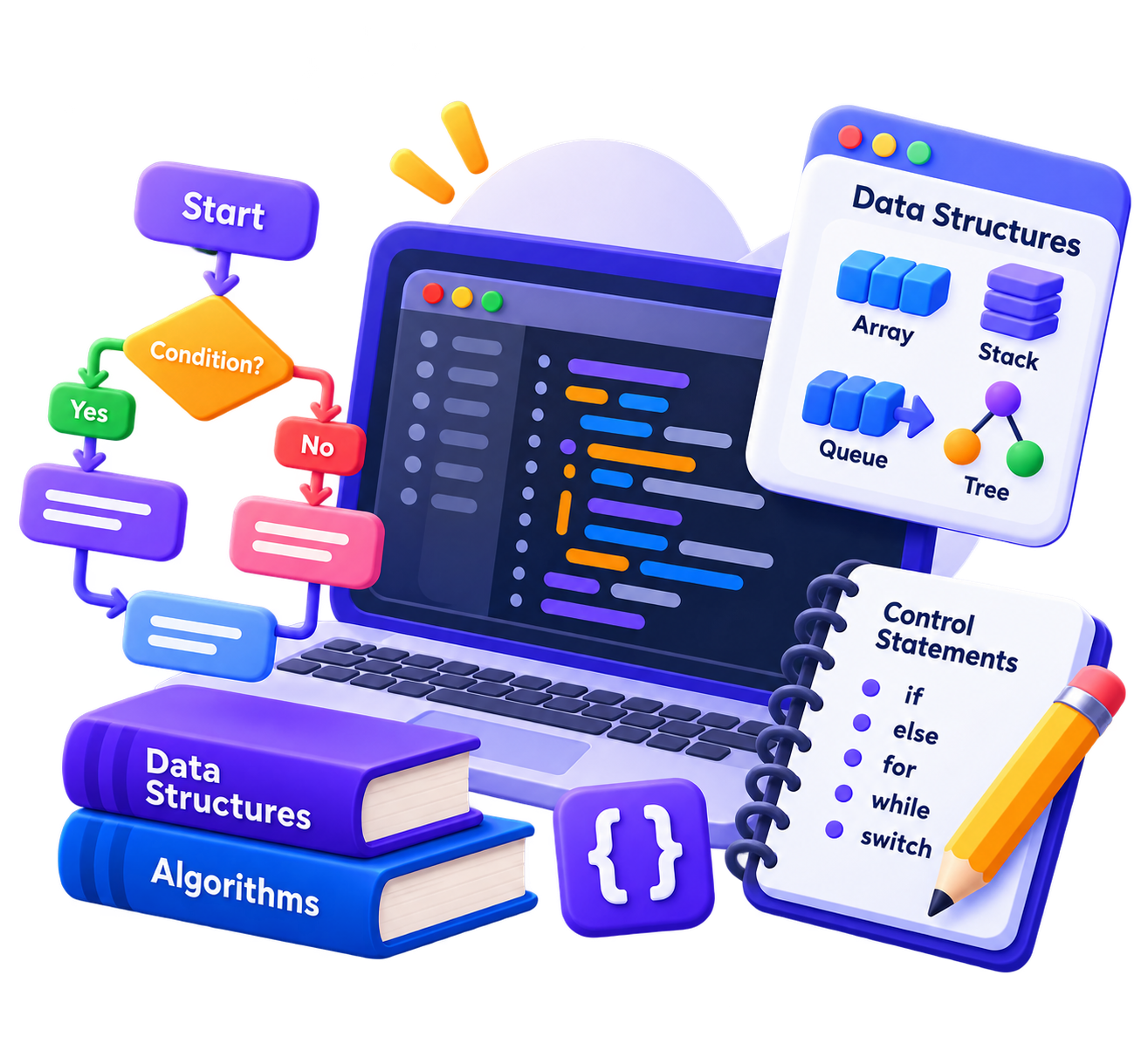
Conditional & loop statements, string, list, tuple, set, dictionary, functions, map/reduce/filter and lambda.
Explore Unit ➜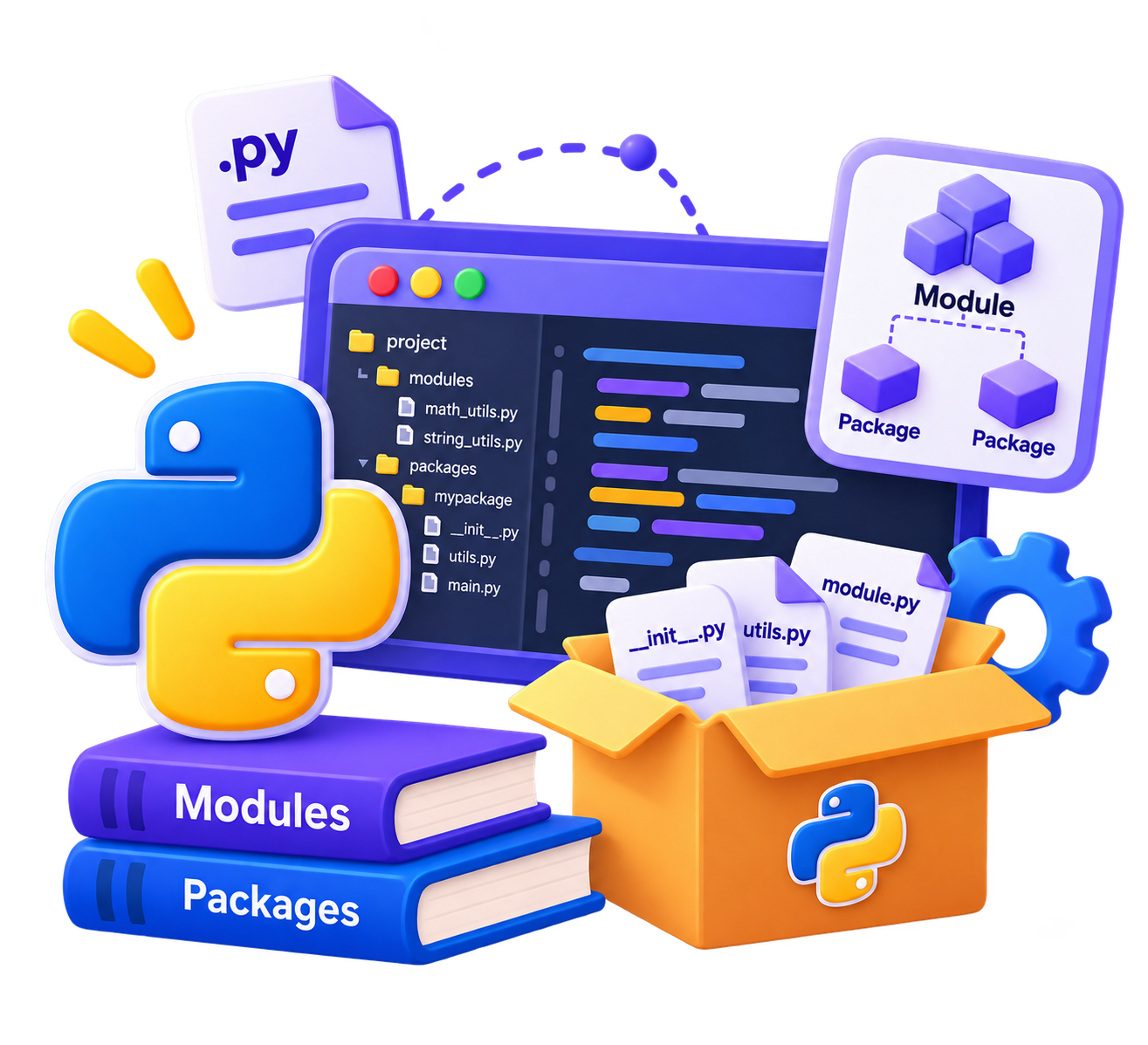
Modular programming, predefined & user-defined modules, packages, file and directory handling.
Explore Unit ➜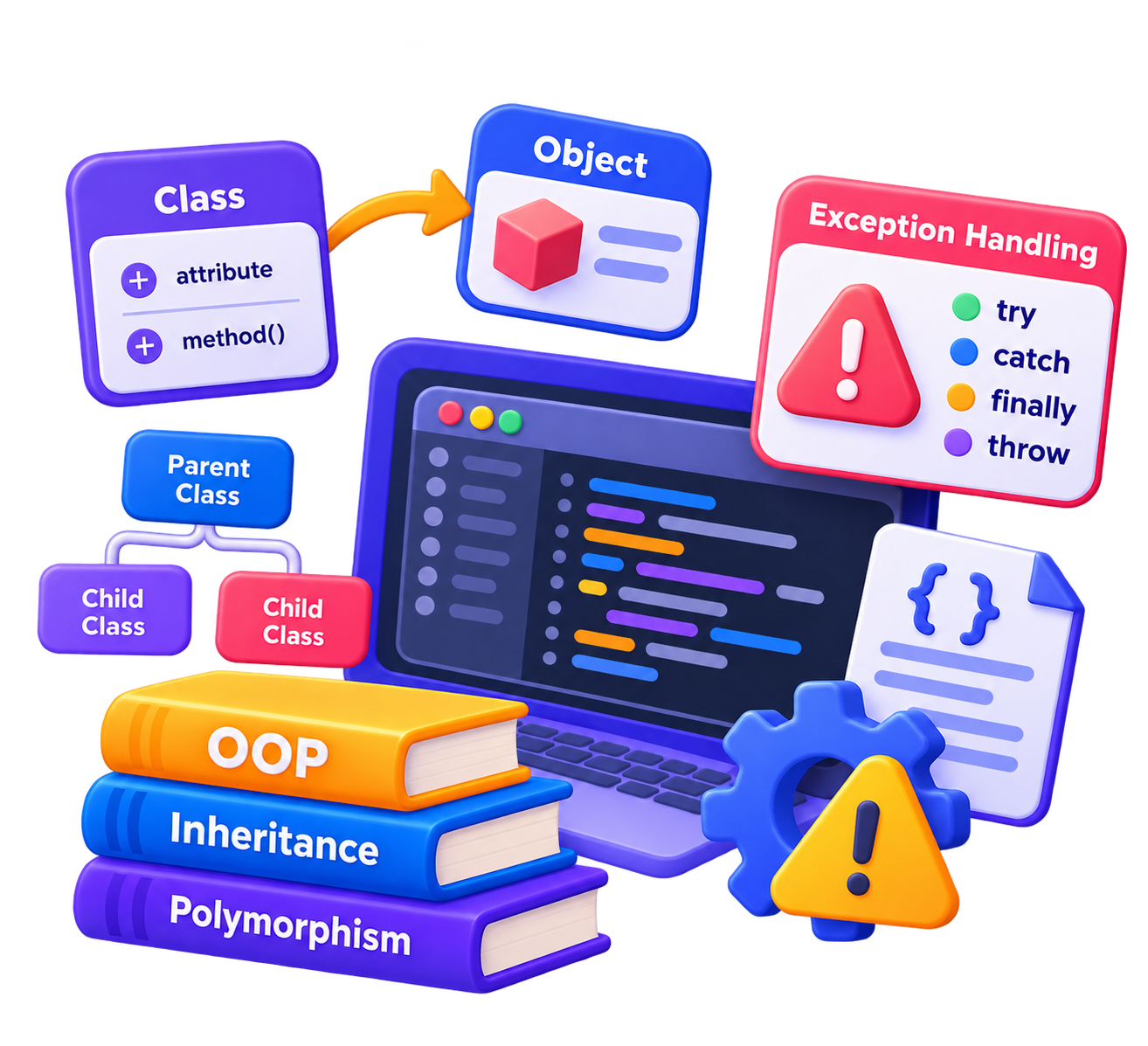
Procedural vs. OOP, encapsulation, abstraction, polymorphism, inheritance, exception handling and regex.
Explore Unit ➜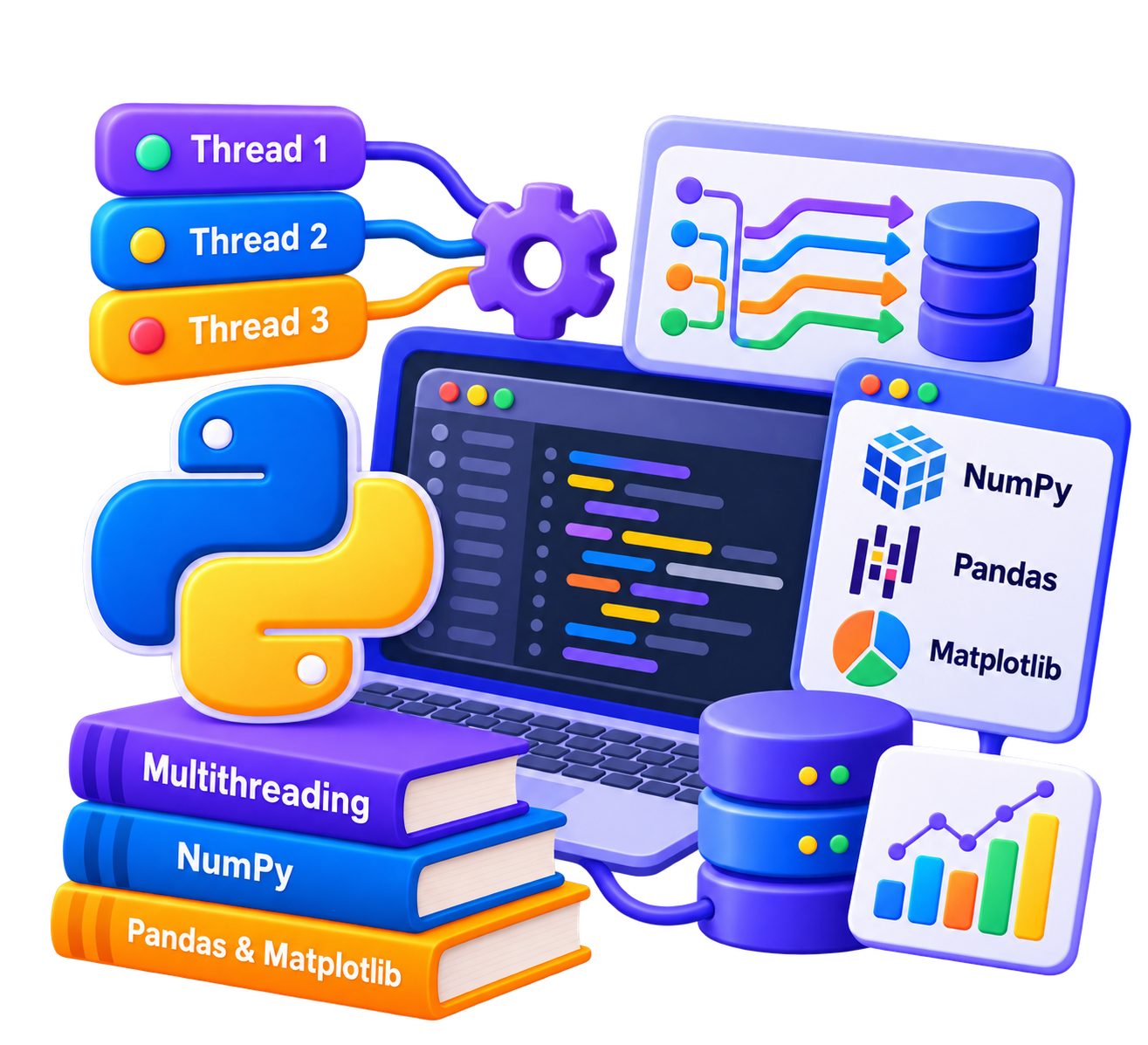
Multithreading, thread lifecycle, synchronization, garbage collection, PDBC, NumPy, Pandas & Matplotlib.
Explore Unit ➜
“Simple code,
powerful
results.”
A complete study resource built around the DAVV BCA exam pattern.
These Python Programming notes for BCA DAVV follow the official syllabus topic by topic. From Python basics and installation in Unit 1 to multithreading and data libraries in Unit 5, every concept is explained in simple language with code examples so you can understand the "why" behind each topic, not just memorize definitions.
Get a strong grip on Python control statements — if/else, loops, and practical data structure notes covering strings, lists, tuples, sets, dictionaries, functions, and lambda expressions. These topics form the backbone of most Python exam papers and practical viva questions asked in BCA DAVV.
Struggling with module notes? Our Unit 3 notes break down predefined and user-defined modules, packages, and file/directory handling with clear examples, one of the most frequently asked topics in Python exams and interviews.
Understand how Python implements OOP principles through our OOP notes — covering encapsulation, abstraction, polymorphism, inheritance, inner classes, and exception handling with try/except/finally and custom exceptions used in real-world programs.
Go beyond textbook basics with notes on multithreading, multiprocessing, thread synchronization, garbage collection, Python Database Communication (PDBC), and an introduction to NumPy, Pandas & Matplotlib — topics that are increasingly important for both DAVV BCA exams and real industry roles.
Every unit includes Python important questions commonly asked in DAVV BCA semester exams, so you can revise efficiently in the final days before your exam without missing high-weightage topics.
Quick answers about Python Programming notes for BCA DAVV students.
The syllabus is divided into 5 units: Introduction to Python, Control Statements & Data Structures, Modules & Packages, Object Oriented Programming & Exception Handling, and Multithreading & Data Libraries.
Yes, all Python Programming notes for BCA DAVV are completely free to read on CampusNotes directly on the website — no login, signup, or payment required.
This unit covers procedural vs. object-oriented programming, encapsulation, abstraction, polymorphism, inheritance, inner classes, exception handling, custom exceptions, and regular expressions.
This unit covers multithreading and multiprocessing, the threading module, thread lifecycle, synchronization using locks, garbage collection, Python Database Communication (PDBC), and an introduction to NumPy, Pandas & Matplotlib.
Yes, CampusNotes is fully mobile-friendly, so you can study Python Programming notes on any device without downloading anything.