

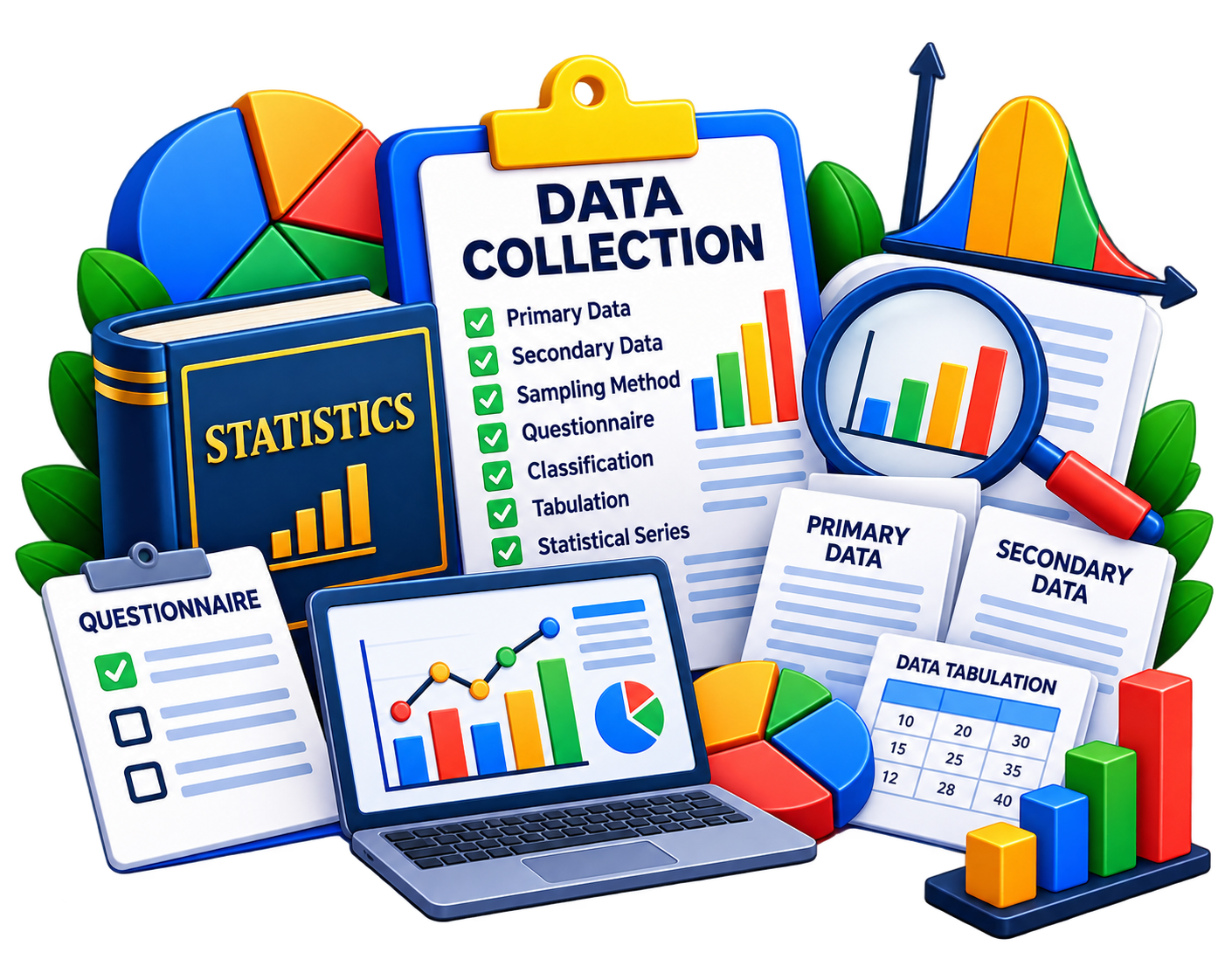
Introduction & Data Collection
Meaning, definition, significance, scope and limitations of statistics, primary and secondary data, method of sampling, questionnaire, classification and tabulation, and statistical series.
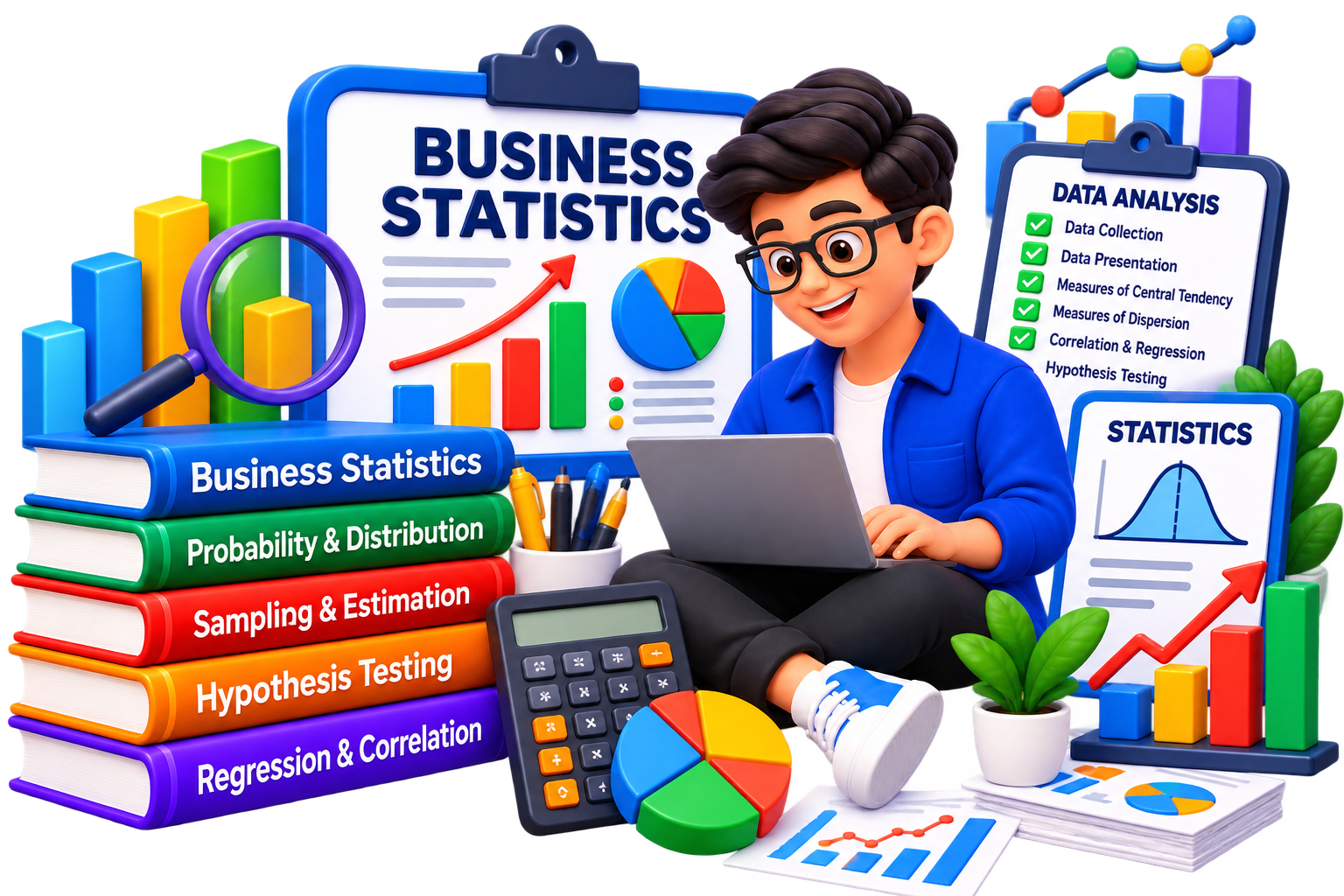
Explore Unit ➜Business Statistics teaches you how to collect, organize, analyse and present data for business decisions. It covers averages, dispersion, time series, correlation, regression and index numbers, the tools used to turn raw numbers into useful insights.
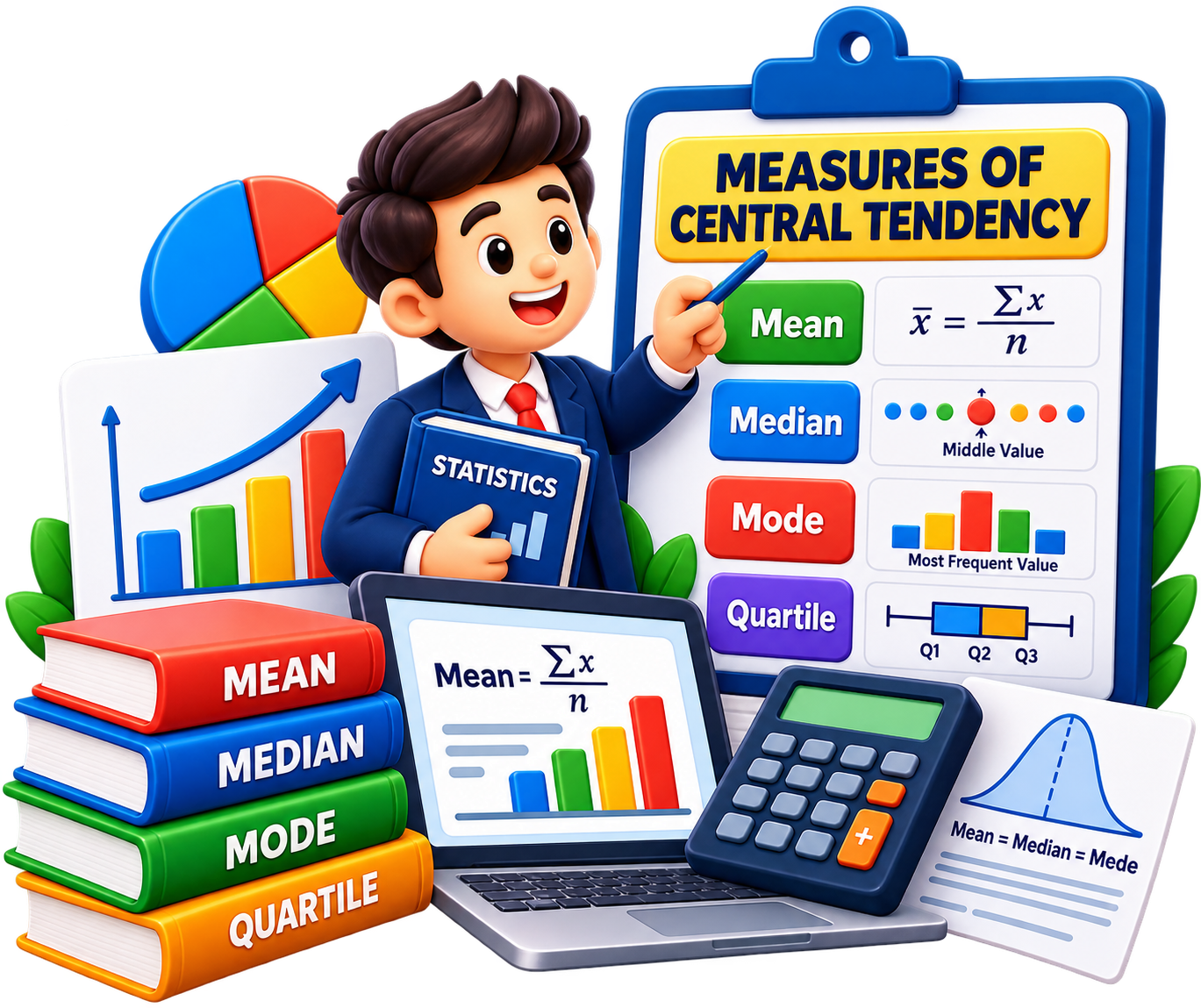
Each unit contains curated notes, diagrams, important questions and more.
Meaning, definition, significance, scope and limitations of statistics, primary and secondary data, method of sampling, questionnaire, classification and tabulation, and statistical series.
Explore Unit ➜Mean, median, quartile, mode, geometric mean and harmonic mean, with solved numericals.
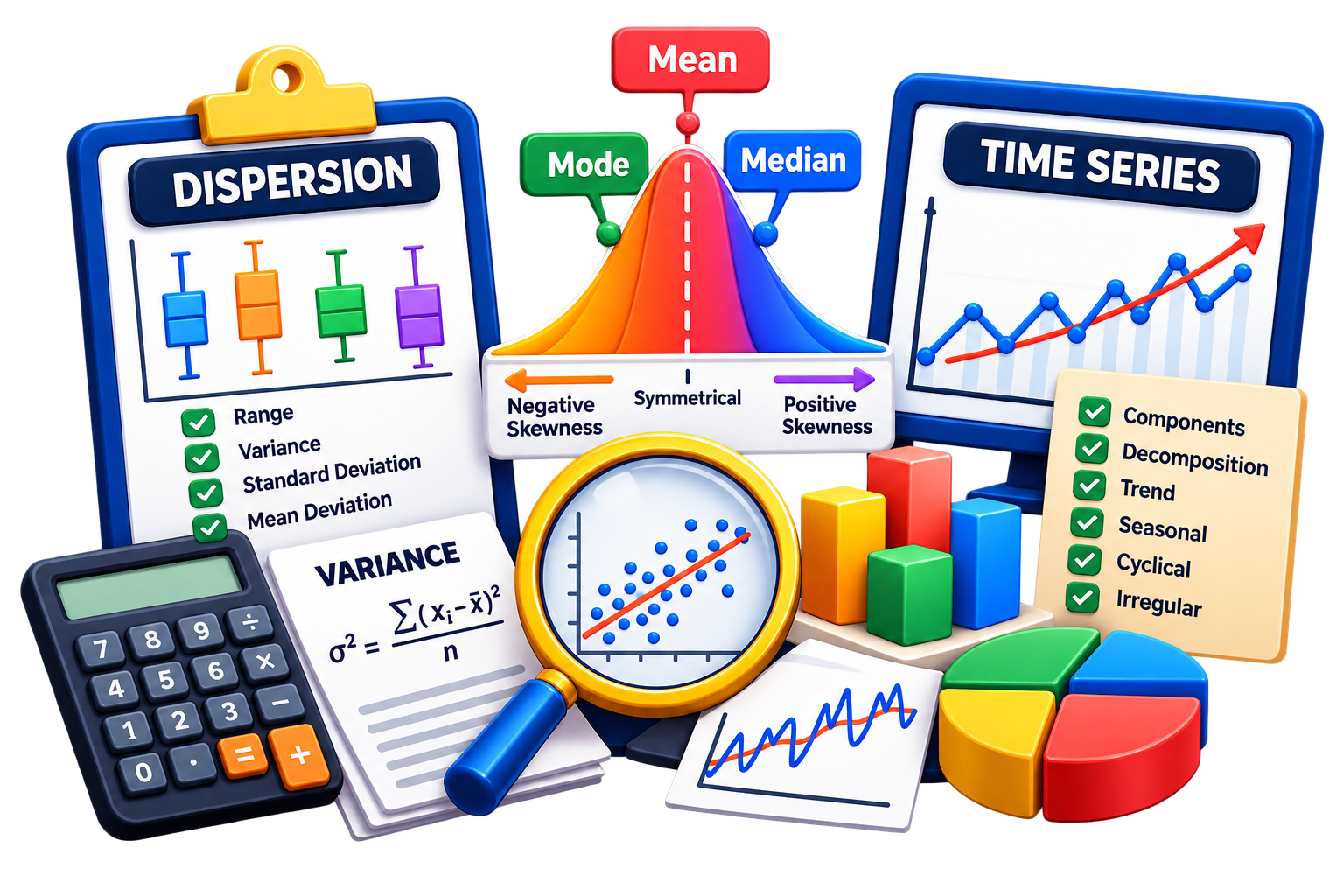
Explore Unit ➜Dispersion and skewness, time series analysis: meaning, importance, components, decomposition, long-term trends, and cyclical and irregular fluctuations.
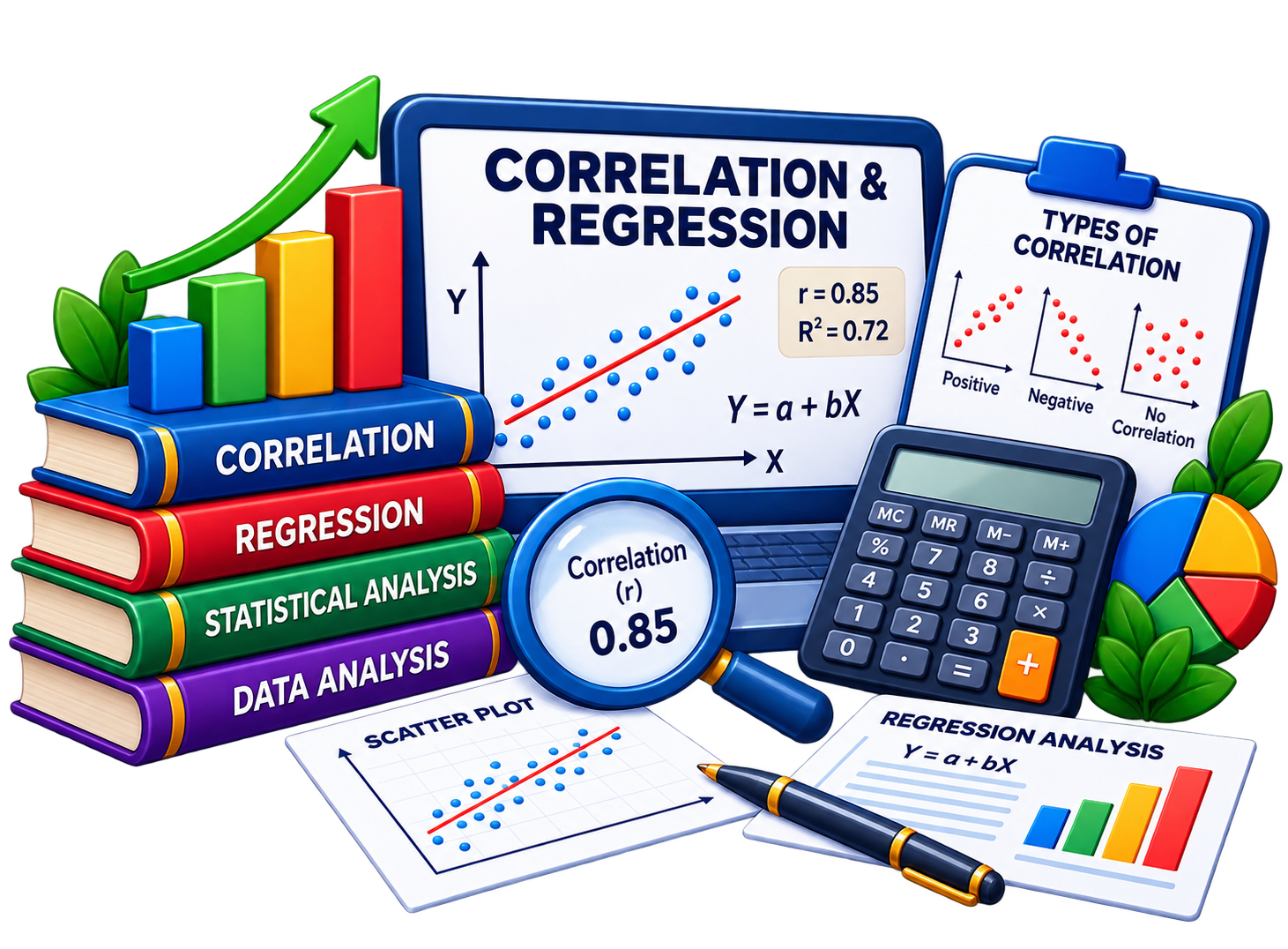
Explore Unit ➜Meaning, types, degree and methods of correlation, regression analysis, difference between correlation and regression, linear regression equation and coefficient of regression.
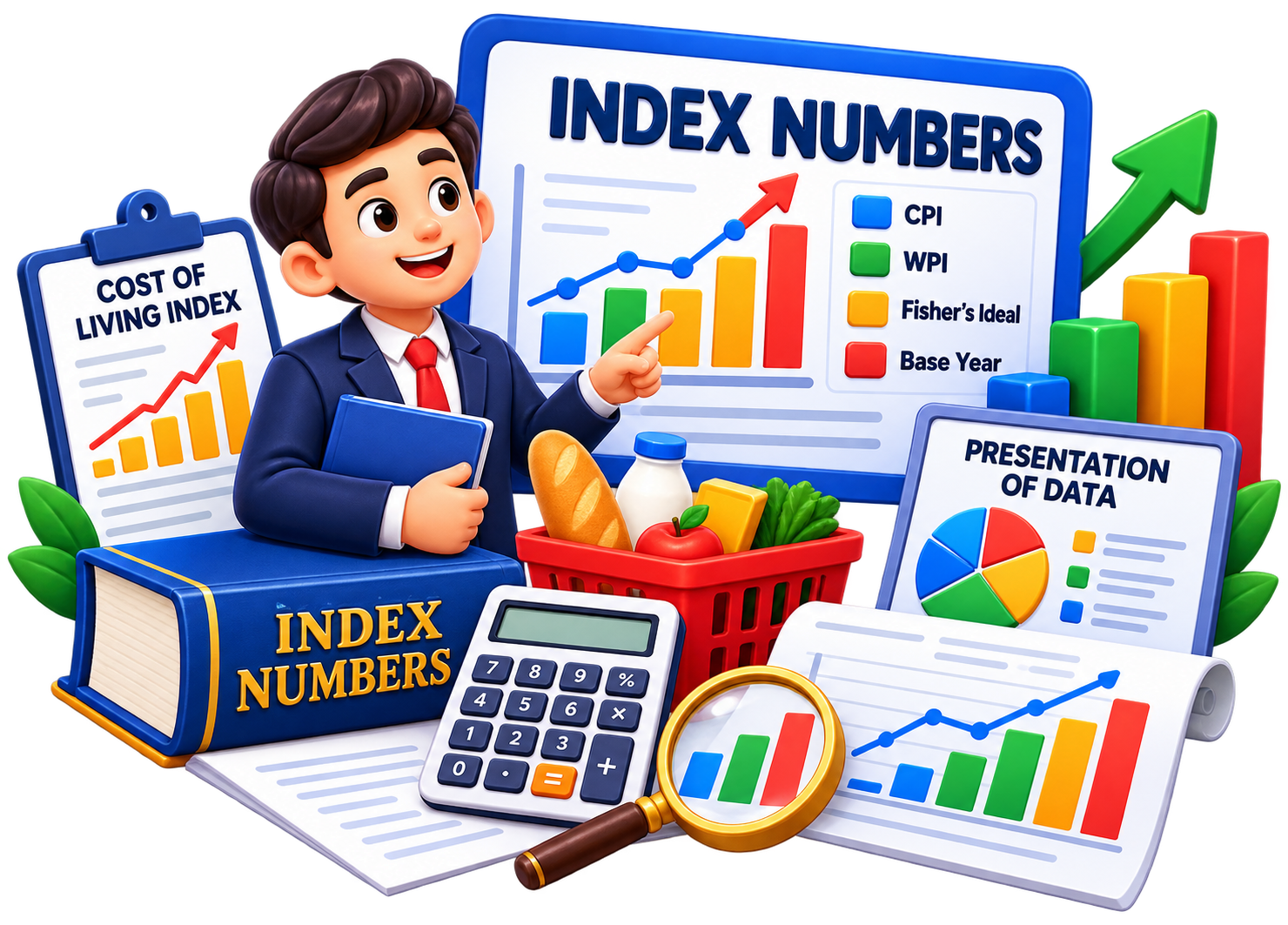
Explore Unit ➜Meaning, characteristics, importance and uses of index numbers, construction, cost of living index, Fisher's ideal index number, and diagrammatic and graphic presentation of data.
Explore Unit ➜A complete study resource built around the DAVV B.Com exam pattern.
These Business Statistics notes for B.Com DAVV follow the official syllabus of Devi Ahilya Vishwavidyalaya, Indore, topic by topic. From data collection in Unit 1 to index numbers and graphic presentation in Unit 5, every formula and method is explained in simple language with solved examples, so you understand the steps instead of just memorizing them.
Build a strong foundation with our Unit 1 notes covering the meaning, significance, scope and limitations of statistics, primary and secondary data, method of sampling, preparation of a questionnaire, and classification and tabulation of data.
Get a clear understanding of the mean, median, quartile, mode, geometric mean and harmonic mean in our Unit 2 notes, with step-by-step numericals that are frequently asked in exams.
Understand dispersion and skewness, and learn time series analysis including its components, decomposition, measurement of long-term trends, and cyclical and irregular fluctuations.
Learn the types, degree and methods of correlation, the meaning and uses of regression analysis, the difference between the two, the linear regression equation and how to calculate the coefficient of regression.
Go through the construction of index numbers, the cost of living index, Fisher's ideal index number and the diagrammatic and graphic presentation of data, explained in a clear and exam-friendly manner.
Every unit includes Business Statistics important questions commonly asked in DAVV B.Com semester exams, so you can revise efficiently in the final days before your exam without missing high-weightage topics.
Quick answers about Business Statistics notes for B.Com DAVV students.
The DAVV B.Com Business Statistics syllabus is divided into 5 units: Introduction and Data Collection, Measures of Central Tendency, Dispersion, Skewness and Time Series, Correlation and Regression, and Index Numbers with Diagrammatic and Graphic Presentation of Data.
Yes, all Business Statistics notes for B.Com DAVV are completely free to read on CampusNotes directly on the website — no login, signup, or payment required.
There are 5 units in DAVV B.Com Business Statistics: Introduction and Data Collection, Measures of Central Tendency, Dispersion, Skewness and Time Series, Correlation and Regression, and Index Numbers with Diagrammatic and Graphic Presentation of Data.
Unit 2 covers the measurement of central tendency: mean, median, quartile, mode, geometric mean and harmonic mean.
Yes, CampusNotes is fully mobile-friendly, so you can study Business Statistics notes on any device without downloading anything.