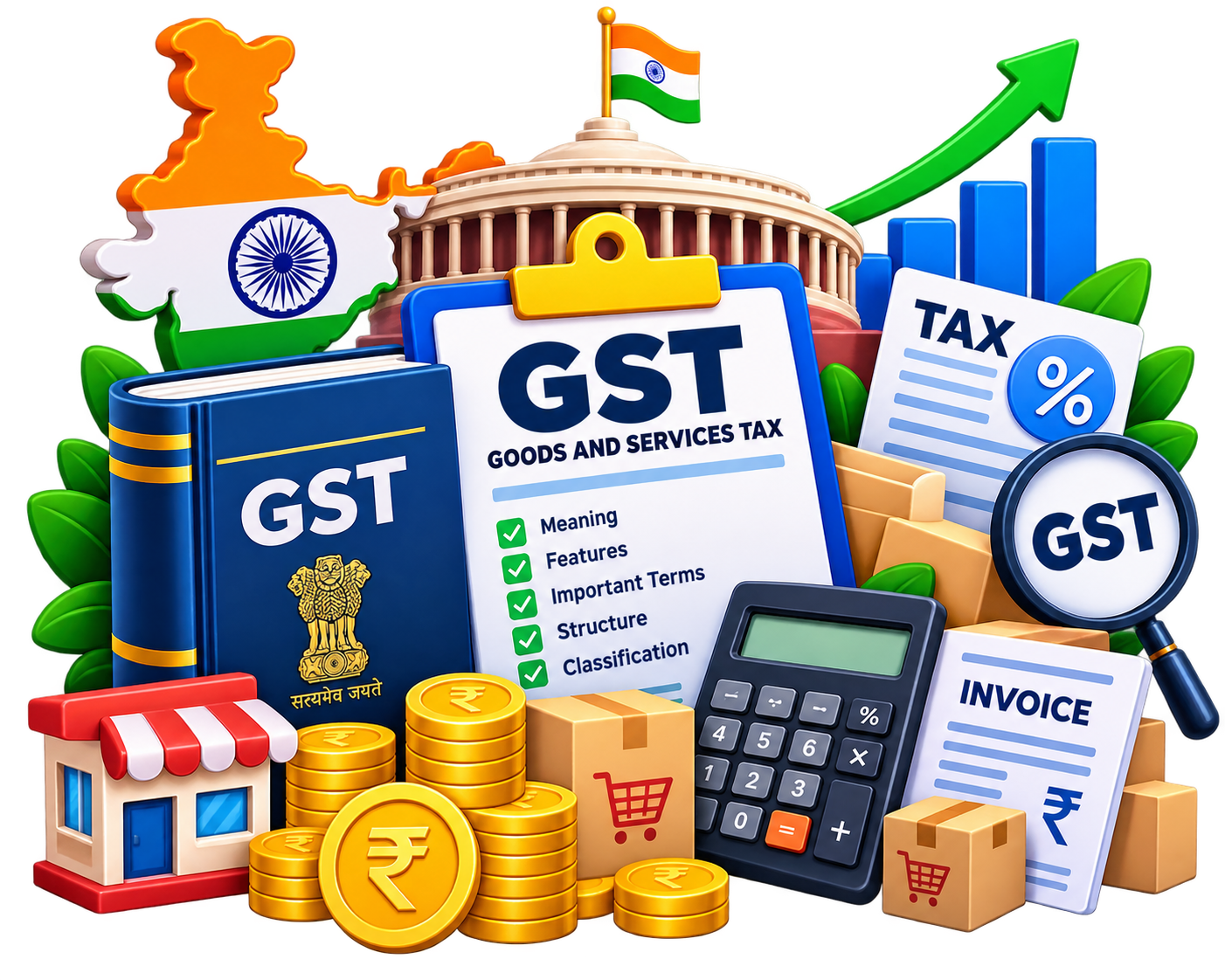
UNIT 1
Introduction to GST
Meaning, features and basic elements of GST, important terms and definitions, background and implementation of GST in India, and structure and classification of GST.
Explore Unit ➜This subject teaches you how indirect taxes work in India. It covers GST concepts, supply, registration, tax invoices, composition levy, input tax credit and job work, along with customs duty, valuation rules and the calculation of duty on imports and exports.



Each unit contains curated notes, diagrams, important questions and more.
Meaning, features and basic elements of GST, important terms and definitions, background and implementation of GST in India, and structure and classification of GST.
Explore Unit ➜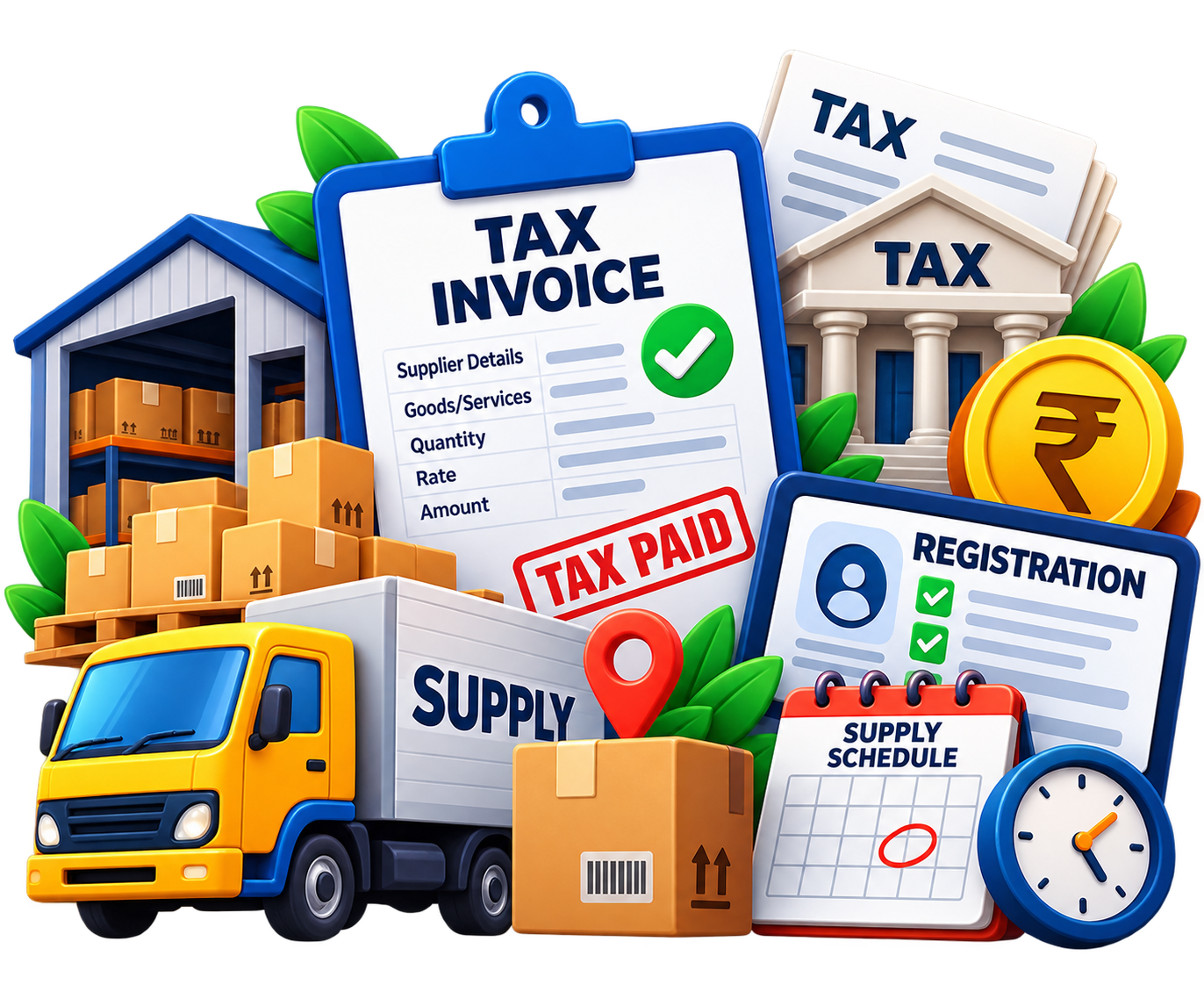
Meaning and scope of supply, composite and mixed supply, levy and collection of tax, registration, exempt goods, time and place of supply, value of taxable supply, and preparation of tax invoice.
Explore Unit ➜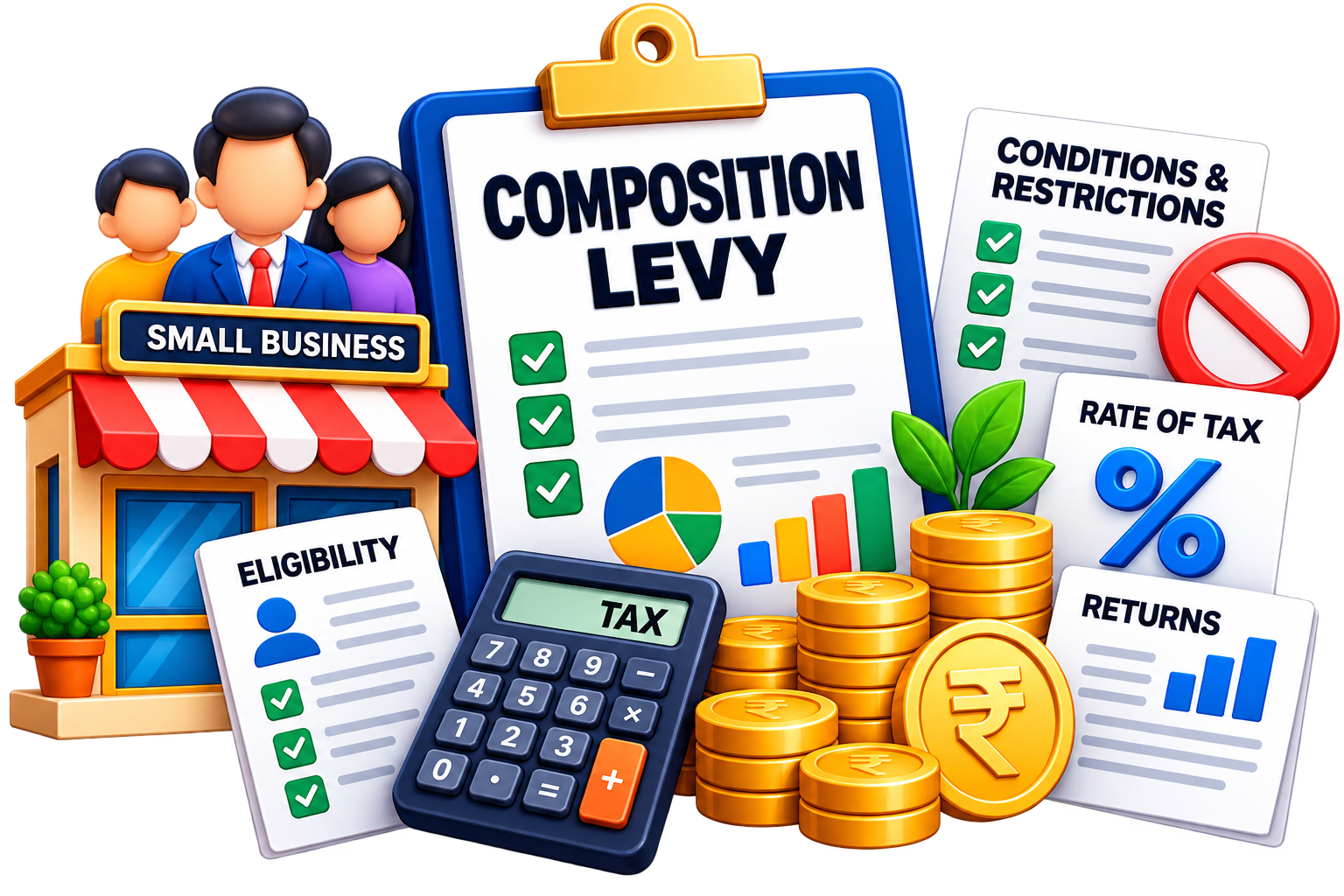
Persons eligible to opt for composition, intimation for the composition option, conditions and restrictions, rate of tax, returns, and practical problems on composition levy.
Explore Unit ➜
Rules, provisions and procedure for input tax credit, provisions regarding job work, classification of taxable goods and services on the basis of tax rates, and practical problems.
Explore Unit ➜
History, introduction and nature of customs duty, types of customs duty, prohibition of import and export, valuation rules, computation of assessable value and calculation of customs duty.
Explore Unit ➜A complete study resource built around the DAVV B.Com exam pattern.
These Goods and Services Tax and Customs Duty notes for B.Com DAVV follow the official syllabus of Devi Ahilya Vishwavidyalaya, Indore, topic by topic. From the basics of GST in Unit 1 to customs duty calculation in Unit 5, every provision and problem is explained in simple language with solved examples, so you understand the steps instead of just memorizing them.
Build a strong foundation with our Unit 1 notes covering the meaning, features and basic elements of GST, important terms and definitions, the background and implementation of GST in India, and the structure and classification of GST.
Understand the meaning and scope of supply, composite and mixed supply, registration under GST, time and place of supply, value of taxable supply and how to prepare a tax invoice, with practical problems.
Learn who can opt for the composition levy, the conditions and restrictions, the rate of tax and the rules for returns, with solved practical problems.
Go through the rules and procedure for input tax credit, the provisions for job work and the classification of taxable goods and services on the basis of tax rates, explained with numericals.
Cover the nature and types of customs duty, prohibition of import and export, valuation rules, the computation of assessable value and the calculation of customs duty in a clear and exam-friendly manner.
Every unit includes GST and Customs Duty important questions commonly asked in DAVV B.Com semester exams, so you can revise efficiently in the final days before your exam without missing high-weightage topics.
Quick answers about GST and Customs Duty notes for B.Com DAVV students.
The syllabus is divided into 5 units: Introduction to GST, Supply, Registration and Tax Invoice, Composition Levy, Input Tax Credit and Job Work, and Customs Duty.
Yes, all GST and Customs Duty notes for B.Com DAVV are completely free to read on CampusNotes directly on the website — no login, signup, or payment required.
There are 5 units: Introduction to GST, Supply, Registration and Tax Invoice, Composition Levy, Input Tax Credit and Job Work, and Customs Duty.
Unit 5 covers customs duty: history, introduction and nature, types of customs duty, prohibition of import and export, valuation rules, computation of assessable value and calculation of customs duty.
Yes, CampusNotes is fully mobile-friendly, so you can study GST and Customs Duty notes on any device without downloading anything.